









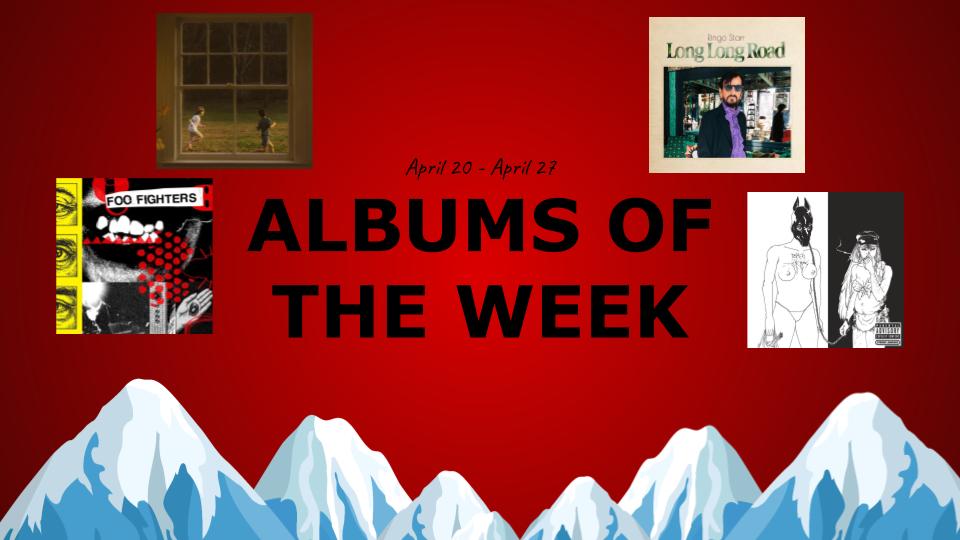






This week, I’ve got another four albums for your listening ears. There will be three new albums from the past week (on a monday to monday basis), however instead of an anniversary of a classic album– we’re celebrating the life of Lo Borges, founding member of the Clube de Esquina scene and artist behind the titular masterpiece “Clube de Esquina”.
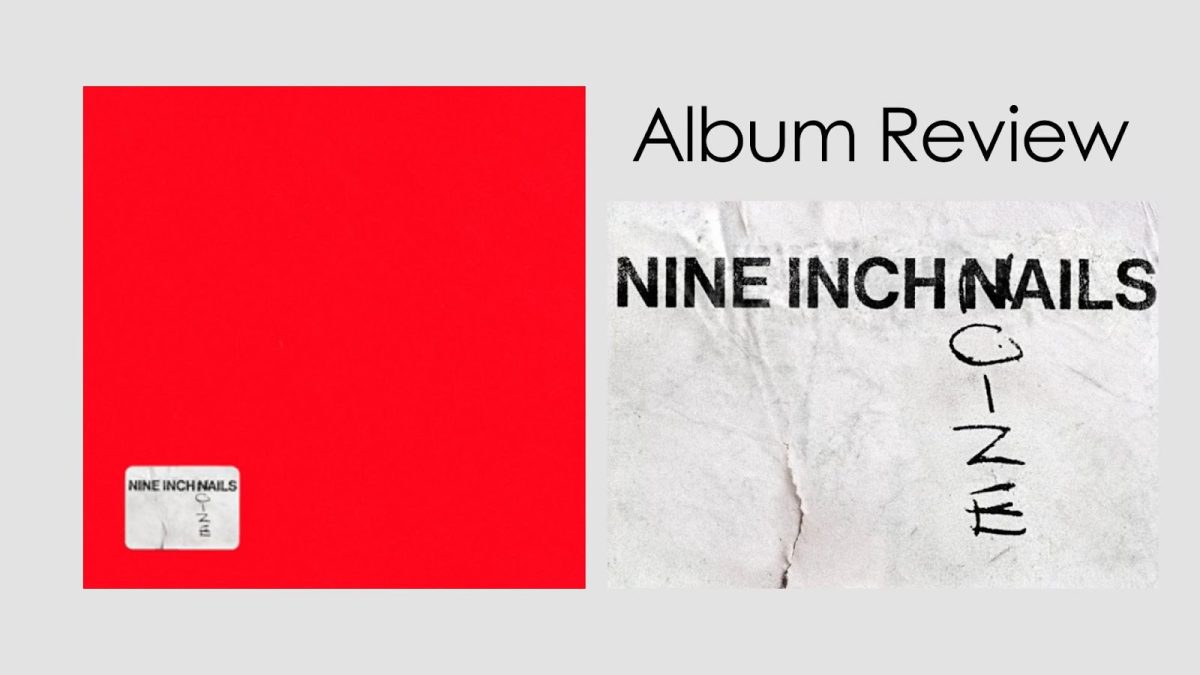
Stardust – Danny Brown
6.7/10
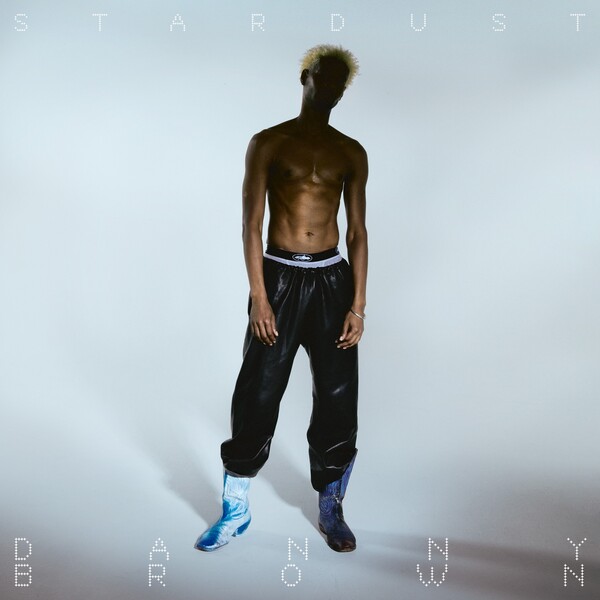
Danny Brown has always been a mainstay in my rotation of hip-hop artists, his unique flows, voice and abstract beats make him stand out as one of the most unique and best rappers of the 2010s. His 2020s so far have been a mixed bag, while his collaboration album with fellow alternative rapper JPEGMAFIA “SCARING THE HOES” is one of the best hip hop albums of all time, his followup solo album “Quaranta” was one of his more mediocre projects.
“Stardust” continues this trend of randomness, resulting in an electronic dance album.
I wanted so desperately to love this album. Danny Brown’s singles and features leading up to this got me very excited for the potential of a new project from him. “M3 N MIN3” with hyperpop artist femtanyl, “THE GREAT BAKUNAWA” on Quadeca’s record from this year and “Psychoboost” on Jane Remover’s were all incredible showings of his talent that I thought he had burnt up on “SCARING THE HOES”. This album from him was a lot of fun, but it doesn’t hold a candle to any of his peaks.
The first issue I take with this record are his lyrics. While Danny Brown has a feature on near every track– which I’ll get to later– even his own lyrics (which presumably he wrote himself) are damn near cringey at times– Chance The Rapper tier stuff like, “They woke me up inside like listen to Evanescence” (“Starburst”) or “Legendary game I carry, shoulder so sore ‘cause the game I carry” (“1L0v3myL1f3!”) are some of the standout examples of lame output on this record.
The beats are an extremely mixed bag. “Lift You Up” is one of the funnest, most danceable hip-hop songs of the year with a UK club inspired sound. “1L0v3myL1f3!” has femtanyl lend her hand again to a classic breakcore style beat and Quadeca’s influence on “What You See” and “Book of Daniel” result in an artsier vibe, giving us some of the best songs on the album.
On the other end of the spectrum, “Baby” is a kick-heavy, repetitive slogfest that revolves around the sample of someone singing “Baby”, which is used entirely too much throughout the track. A lot of other beats go for the drumless style but aren’t full enough in other aspects to make up for it, resulting in “Right from Wrong”, “1999” and “All4u” sounding unfinished.
The production is my main criticism here– for someone with a tenured streak of gorgeous sounding albums as Danny Brown (ignoring the terrible re-mastering JPEGMAFIA did on “SCARING THE HOES: DIRECTORS CUT”). While his beats are normally “out-there” even for alternative hip-hop standards, the bizarreness of them on this record crosses over from hip-hop, past breakbeat and into straight bubblegum bass at times. If his voice had been mixed for and even into the unique backtracks we could have seen an extremely unique take on hip-hop, instead we’re left with Brown’s rapping plain and simple on top of these insane beats.
Fans of Danny Brown’s newer work may look at a tracklist where all but two of the songs have features and wince– but in the past his records have been filled with features. Never to the extent it is on this record, but the point stands. The features that are on this record however, more often than not take away from a song. I already spoke to Quadeca and femtanyl’s positives, but that’s about all I can say in the positive. Most artists don’t add anything, “ISSBROKIE” and “underscores” provide variety but nothing special. Then there’s the worst offenders: JOHNNASCUS’ screaming clashes too hard with Danny’s rapping on “1999”. 8485’s vocals on “Flowers” are over the top and downright annoying.
I’m dedicating an entire paragraph to “Green Light” with Frost Children– this track alone probably knocked the track down a few decimal places. The beat is plain, uninspired and does not change throughout the track. Danny’s bars are boring on their own and the lyrics are straight-up childish. The true murder of this track is Frost Children. If Twenty One Pilots are a lazy, commercialized imitation of emo music, Frost Children sound like a lazy, commercialized imitation of Twenty One Pilots. His vocals are ear splittingly bad, trying to imitate both the whining of emo artists but also the quality of soul-samples that you might traditionally find in a rap track. This indecisiveness (and laziness) results in a miserable track. I truly refuse to believe Danny Brown listened to the track in full and decided it was album worthy.
This album surprised me many times. Again, the highs are exciting, fun and contagiously enjoyable– offering a different but equally impressive musicality than Danny Brown’s earlier work. However– those lows are just too low for me and it personally takes away a lot of interest in listening to this album in full.
Lux – Rosalia
4.9/10
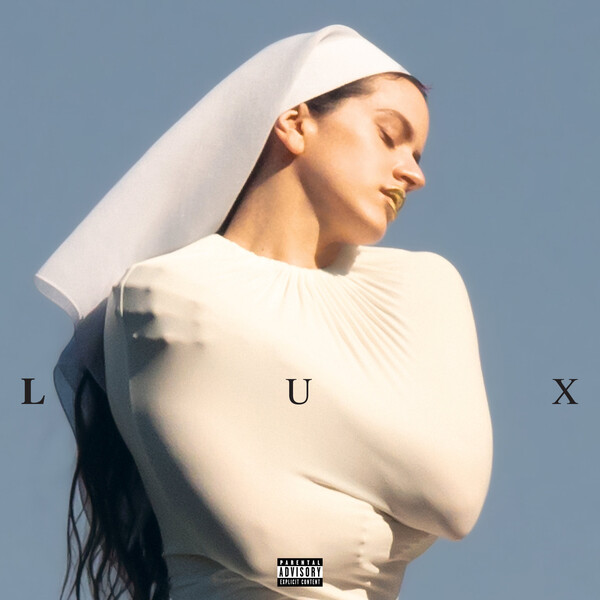
ROSALIA never caught my attention before, but leading up to the release of her single from this record “Berghain” got me excited– thanks mostly to a feature from Bjork. The final album instead has left me confused and slightly empty.
Of course, praise where praise is due. I love a good string section and this album damn near crosses into classical music at times with how full its orchestration is. That single “Berghain” is the main highlight, its strings are absolutely phenomenal– with the dancing, sharp tones of the violin resting atop the dark timbre of cellos and pounding classical percussion to drive it all forward, it’s quite an enjoyable tune. This kind of classical orchestration continues throughout the album and while none of the tracks are quite as grand as “Berghain”, the quality never diminishes in terms of the strings and all the instruments. They are played and mastered phenomenally.
Her voice is absolutely wonderful– there’s zero doubt about that. In a way, the inhuman performance of her vocals wraps around back into it sounding bad. Look at “Sauvignon Blanc”, her final crescendo has her close with an objectively beautiful vocal vibrato: but all it does is annoy me. The album is pop music, so it’s always going to sound at least slightly commercialized, but there’s too much of a fake sheen on this record that it’s closer to that of Taylor Swift’s than it is to Bjork’s.
Eventually, the music gets repetitive. The second half of the album is where it starts to really drone on me, the vocals are repetitive, the compositions stop getting creative. Admittedly, they were never that creative to begin with. When they shine, they shine very bright but for the vast majority of this record you’re stuck with boring, hollow mockeries of classical music.
The backing vocals on “La Rumba Del Perdón” eventually get bothersome when they’re repeated for the entire track and sound ran through an AI-filter. This album doesn’t seem like the kind to use sampling, but instances like this (and the repeated “I’ll fuck you till you love me” on “Berghain”) are crude and bothersome. There is of course the “variety” argument, but there are so many albums with exciting variety in genres that don’t make the mistake of blending them in such a miserable way.
While at times the pop structure over the exciting classical compositions creates an interesting and pleasant blend of genres, more often than not the blending is unpleasant. On “La Rumba Del Perdón” there’s a painful combination of western classical music with contemporary flamenco sounds and the castanets sound abhorrent with the full orchestra. Instrumentation on “Memoria” is almost entirely absent, left mostly to one harp (other than the 30 seconds they felt should have a string arrangement for some reason) of the song allowing her vocals to “shine”.
The album, for all its poor attempts at copying the exciting crescendos of art pop and classical crossover music ends extremely abruptly,it leaves a terrible taste in my mouth. As if the entire record was for nothing– there was no payoff to the near-hour runtime that probably would be better off spent listening to an actual piece of classical music.
I don’t ever see myself coming back to this album. It’s superfluous grandeur attempts to draw worldwide influences and create what would be a cross-country masterpiece– instead, we’re left with a poor imitation of art pop by a to-be AI replaced vocalist and string arrangements that are almost always choked back and left to be nothing. That’s what this album is: nothing, encased in smoke and mirrors convincing you Rosalia is the second coming of Bjork– no, Rosalia is nothing to me.
The Mocking Stars – LAUSSE THE CAT
8.2/10
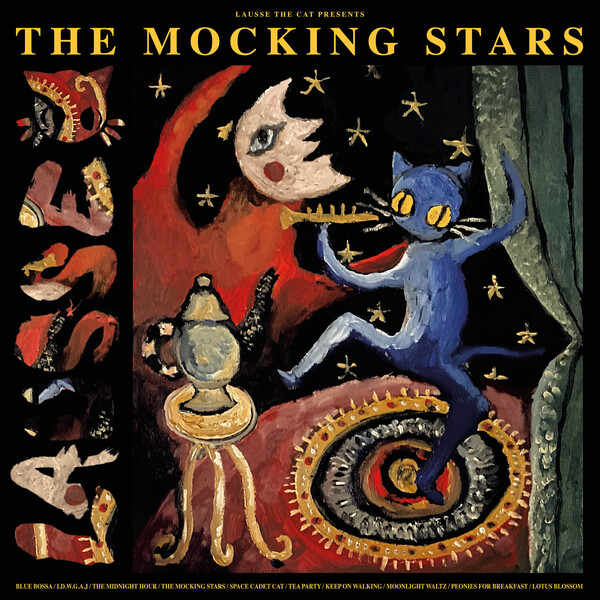
It’s really good jazz rap. It’s whimsical, adventurous and has a phenomenal storyline. It’s also produced gorgeously to boot and for such an indie project it sounds so grand.
This article is too long to say much more of anything else but you should really listen to this record.
Clube da Esquina – Milton Nascimento & Lô Borges
9.2/10
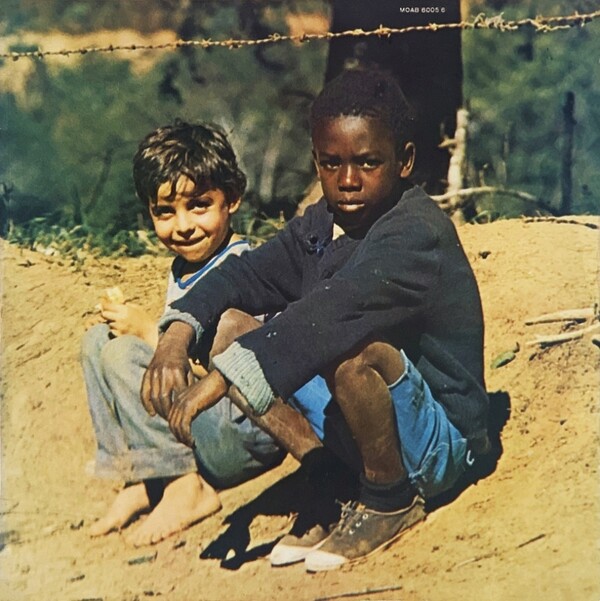
There is no doubt in my mind that if this album was released in the United States or western Europe that it would be held in the same regard as the likes of “Abbey Road”– that is to say not only an extremely influential album, but one that is insanely good too. The importance of this album to Brazilian culture as a whole is impossible to truly sum up, but musically, it’s quite easy: this album was so far ahead of its time that it baffles me every time I listen to it.
The easiest one-word description I can give of “Clube da Esquina” (roughly meaning “Corner Club”) is enchanting. From start to finish the album encapsulates you in this gorgeous, soothing, lush, summertime enchantment that places you right on the beaches of Rio de Janeiro. Though this Rio is not the one you’d see in movies. It’s not the bright, parade-filled land of endless parties that it has come to be known as– it’s a too-warm, sandy neighborhood where there’s nothing to do but long for a better life.
MPB ( Musica Popular Brasiliera) is a pretty loose genre, but at its core is modernized bossa-nova with contemporary rock, soul and at times folk elements. This album leans towards more of the folk side of things to deliver an album that while best described as psychedelic, baroque pop– is ultimately still MPB. While there is occasionally use of traditional brazilian instruments, with percussion like the caxixi and the carillon, most of the rest of the instrumentation is more of the expected. Beautiful acoustic guitar, gentle piano and a cool bassline. Nascimento more often features some variety such as some trumpets on other woodwinds, whereas Borges finds more comfort in the classics.
Instead of treating the album like one large collaboration, it serves more as a vessel for Lo Borges and Milton Nascimento’s music to exist together but separate. While there are stylistic differences between the two collaborators, Borges and Nascimento are close enough that despite the separation, it flows wonderfully.
To be perfectly honest, I do not have much to say about this album. It is one of the best albums of all time in my opinion and every second of it brings me pure joy. Yes the mixing is not perfect and at times tracks can blend into each other, but those are nitpicks. Many of my favorite albums are bizarre, avant-garde pieces that aren’t always easy to get into– this album will immediately suck anyone into its warm, gentle, caressing breeze.
May Lo Borges, one of the greatest Brazilian musicians of all time, rests in peace.