




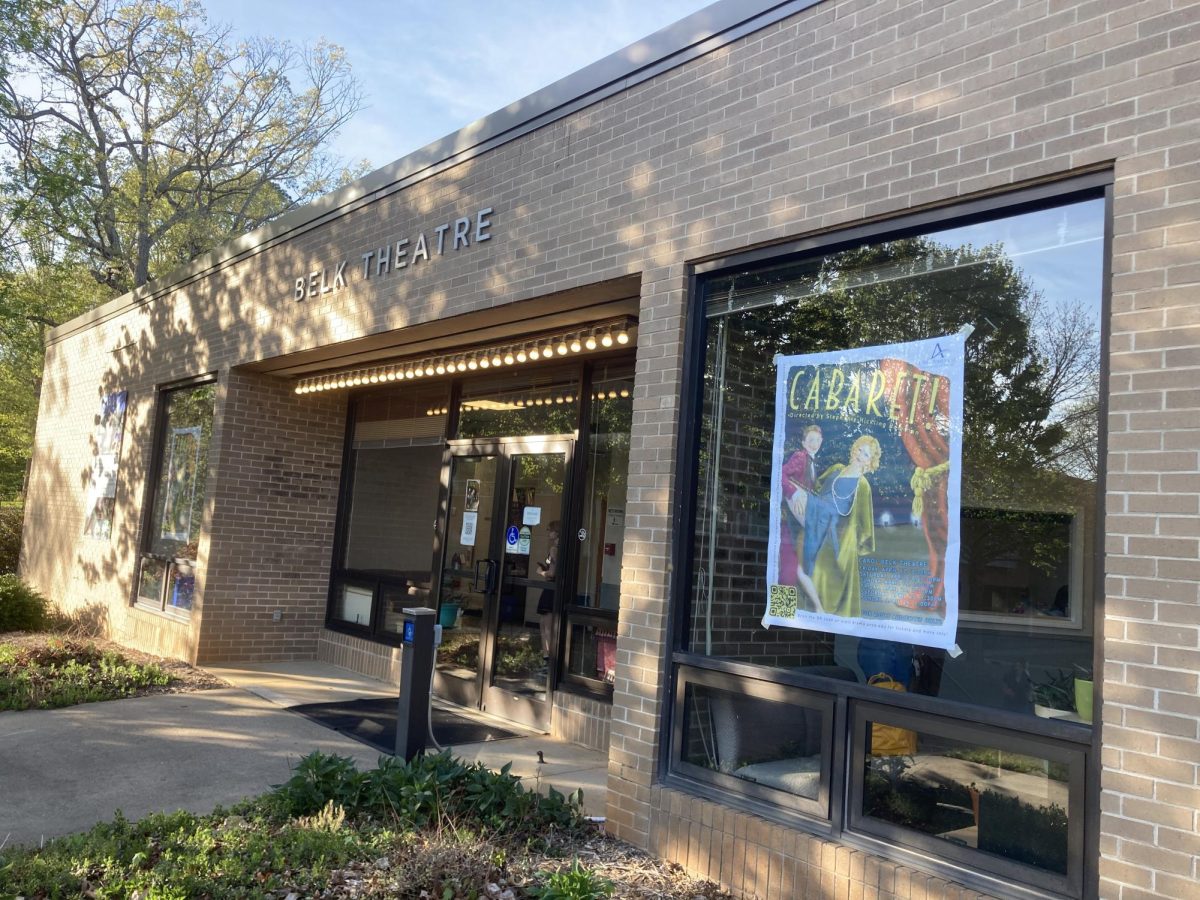










Asheville, a haven of the arts, is known for its mirth and gaiety. UNC Asheville is cutting its theater program. UNCA also performed its final production with “Cabaret” on Apr. 26.
“We have no troubles here,” The EmCee, played by Max Thompson, said.
Berlin, an enclave of expression, is a place full of joy and frivolity. A place where you can get a local craft beer and enjoy the nightlife, a place to explore a vault full of passions of delicious sin. A place to forget about everything for just a little while.
Because everything is beautiful here.

“Berlin was incredibly socially liberal despite the economic hardship. Weimar was intensely liberal and had a lot of culture. Queer life flourished a lot within Berlin during the time and it was generally accepted,” said Shiloh Wells, the Dramaturge for the play.
A place to be with your good friend and that smiling fellow you shared a seat with. A person who shares the same temptations of hedonistic pleasure and earthly desires as you. A hypocrite.
A place where a lady just trying to get by, one who survived time after time. One who has felt loss, to whom something as simple as a pineapple means more than the world.
“On July 24, the program was officially cut by the UNC System Board of Governors, which unanimously approved UNCA Chancellor Kimberly van Noort’s proposal,” the Mountain Express reported.
“Cabaret” was excellent. The intensity of its energy was executed with perfection. To experience the last ever production of the theater department was an honor in and of itself. To experience a show with such quality is a joy in its own right.
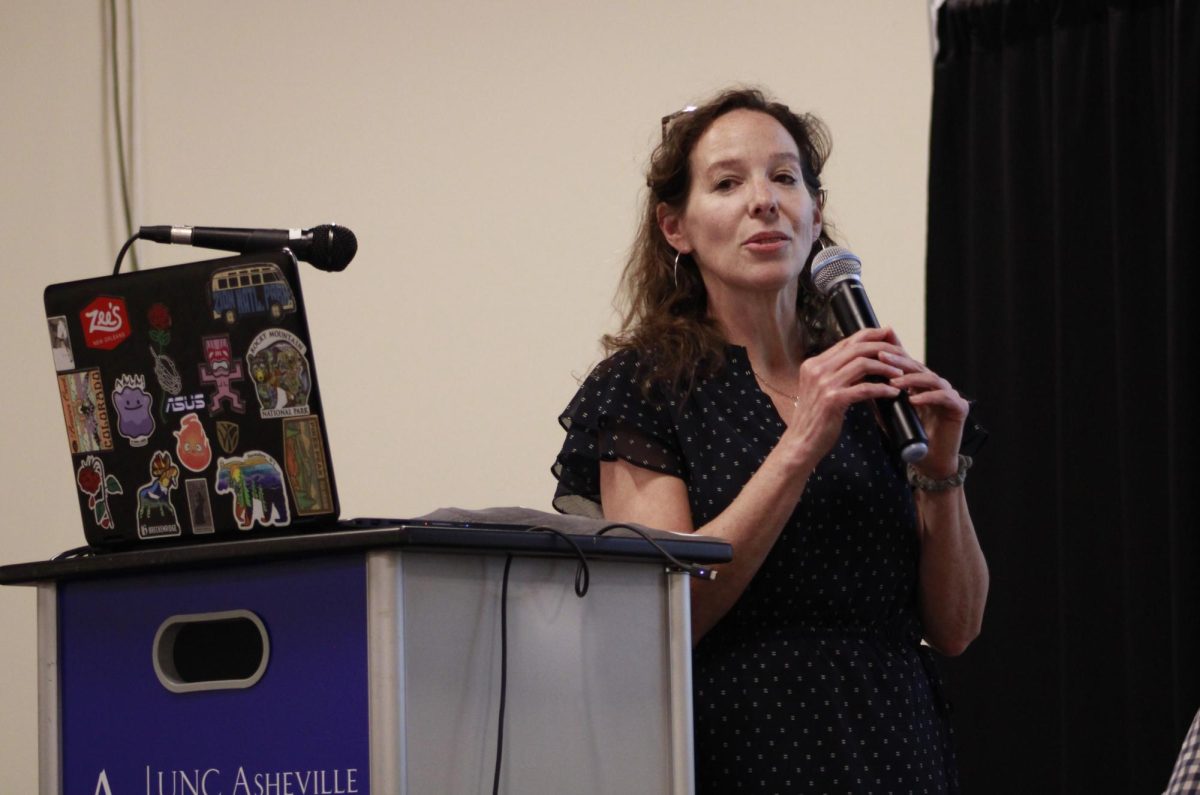
“Theater predates the University,” Lise Kloeppel, chair of the drama department said.
This is not a unique event in regards to other departments at UNCA, but it is instead indicative of a broader trend within universities with other notable cuts to theater departments.
“The University of New Orleans, their department is potentially closing, it’s happening all over,” Kloeppel said.
The filled Carol Belk Theatre captures every sound, its awe amplified with a more than audible audience. You can’t shake the inevitability that this is the end and that you might as well enjoy it to the fullest you can before it’s gone. All sorrows seem to sublimate away — at least for some time.
“Weimar ended up doing the radically unpopular thing of deciding to cut government spending, which nobody liked,” Wells said.
Money makes the world go round.
“I’ve lost a good source of personnel for my company,” Cabaret Director Stephanie Hickling-Beckman said. She is currently directing William Shakespeare’s Othello with the Montford Park Players, just a short mossy stone walled walk from UNCA.
Rain seeped through the roof of the Carol Belk Theatre a couple years back, the water leaking onto a well-loved and trodden stage. It’s a pretty good thing that was fixed for a show with so much beauty and splendor. That same dark, dusty place built in 1977 held the beauty of the light’s shine reflecting from the sequined coat of Sally Bowles, played by Finch Conner.
Even that place could have such allure.
“Within fascism you see heavy repression of the arts,” Wells said.
Soon, that same building where everything in it was beautiful — it is to be an empty space, a storage or server room. Maybe if you saw it through my eyes you’d understand that it doesn’t look dusty at all.
“That was one of the largest ways for UNCA to exist outside of here and they didn’t care enough to figure out to keep it going,” Beckman said
Welcome to Asheville, happy to see you.
“We’re afraid it’ll end up being storage, I heard possibly of a server farm, nobody knows. Nobody’s getting answers. Nobody knows. There’s a lot of guesses and suppositions but nobody knows for sure,” Beckman said.
You learn how to settle for what you get.
“Theater is one of the most A.I. resilient things you can do,” Kloeppel said.
The decline and decay of Berlin’s exuberance and full bodied existence crept in at its petty pace from step to goose-step to the last syllable of Mein Kampf. Freedoms and festivities once enjoyed were edged out of social and legal acceptability.
“You mean politics? What does that have to do with us?” Sally said.
How long does it take for the goose’s step to fall? In this case until the end of act one, where that smiling fellow is discovered to be a Nazi.
“The Nazis didn’t come out of nowhere,” Wells said.
The rise of fascism is like milk boiling. You can feel the temperatures rise and scald your finger burnt before it spills over so instantly.
“Tomorrow belongs to me,” the Nazis said with their crowd clapping. And it is gone just as fleetingly.
“The Nazis came to power in ‘33. Before then, they had existed as the Nazi Party since 1920, they weren’t very popular to begin with,” Wells said
Many of them were that smiling fellow you shared a seat with, born from the same humanity as any sister under the skin. Even if they are your earnestly good friend.
Beware the daggers in men’s smiles.
“They are my friends and neighbours,” Frau Schneider, played by Rachel Huneycutt, said.
What would you do? Would you sell love for a license? You can’t blame anybody for just wanting to survive.
Leave your troubles outside.
Just escape. Forget about what troubles you. Or maybe punch a Nazi, even if you’re sure you’re gonna get beat up afterwards.
“Hitler’s rise and fall, that’s kind of a mirror image of our current climate right now. in particular how it kind of snuck in under the radar where people were distracted with other things and not really paying attention to how the world was changing until it was too late,” Beckman said.
There was a theatre at UNCA.