



















The Barry Goldwater Scholarship provides support to students who aspire to be a part of the next generation of researchers in science, engineering and mathematics— a prestigious scholarship that UNC Asheville Makayla Williams received for her work in life sciences.
“I’ve always loved biology,” Mick said. “I feel like people with an eye for art have an eye for nature.”
Mick, a double major in biology and art, was nominated for the scholarship by her mentor,. Jonathan Horton, PhD. Despite nominations, Mick worked closely with Graham Reynolds, PhD, on an essay about her research and how the scholarship would help, along with a long questionnaire.
The scholarship itself is a partnership between UWorld, the Department of Defense’s National Defense Education Program and The Barry Goldwater Scholarship and Excellence in Education Foundation. For the 2026-2027 academic year, 454 scholarships were awarded from an estimated pool of 5,000 applicants, according to the foundation.
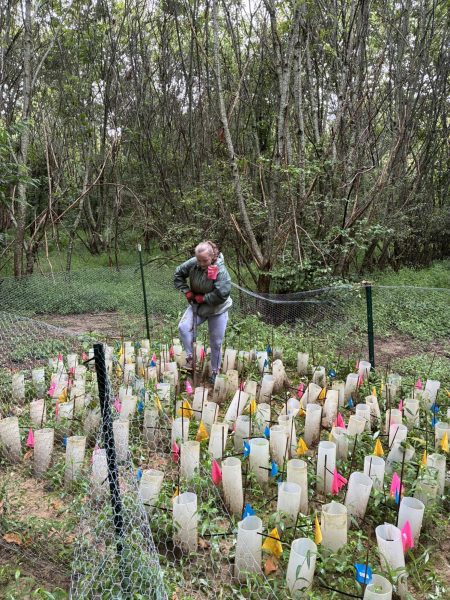
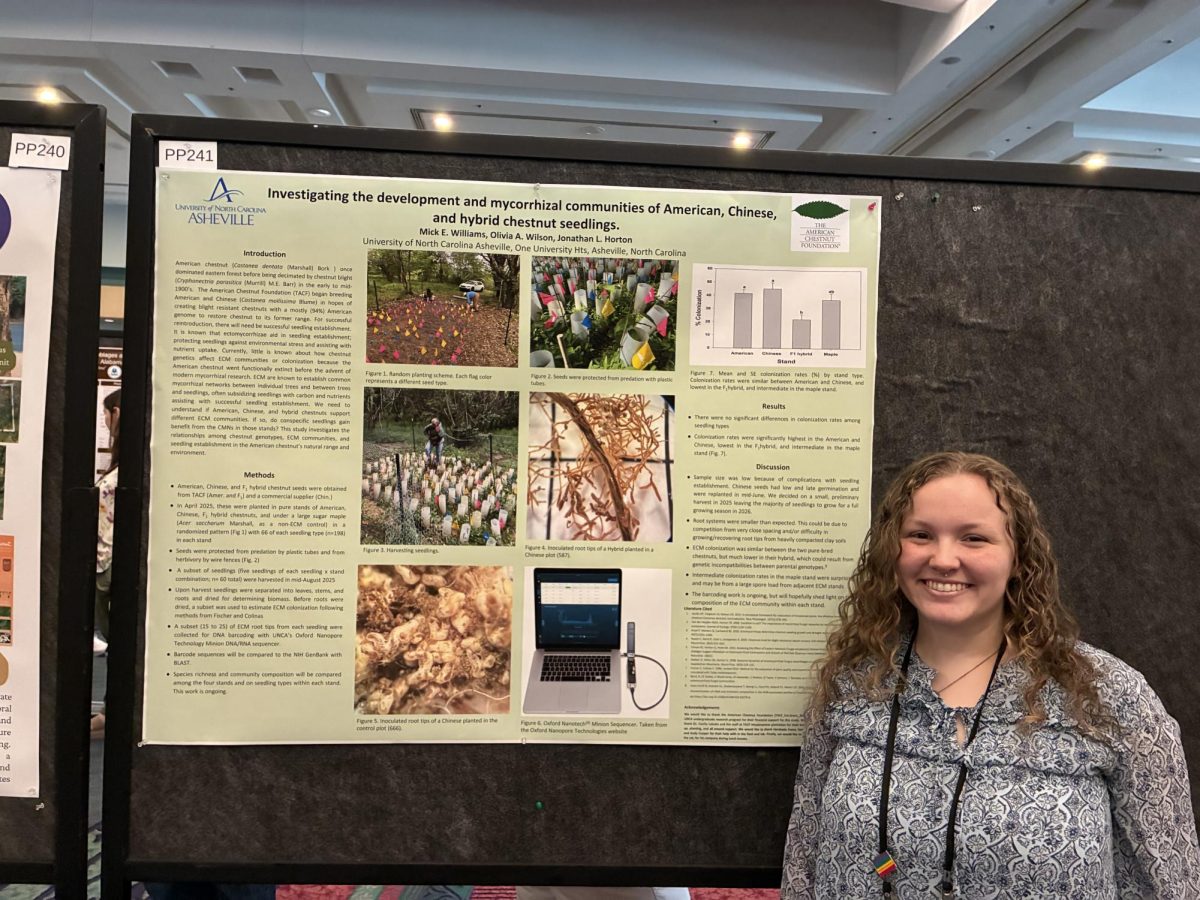
Mick’s research focuses on mycorrhizae communities of American Chestnut and their F1 hybrid, the Chinese Chestnut. Their goal is to aid the introduction of the 95 percent American Chestnut since it has become functionally extinct— meaning it no longer grows to sexual maturity in the wild.
While the trees do grow in the wild, they often suffer from dieback, dying from circulation cut off just as quickly as they sprouted, according to Mick. Mycorrhizae are incredibly important for the health of the tree due to their ability to transport nutrients, water and more. If the research is successful, their relationship with the American Chestnut could increase the success of seedlings’ survival.
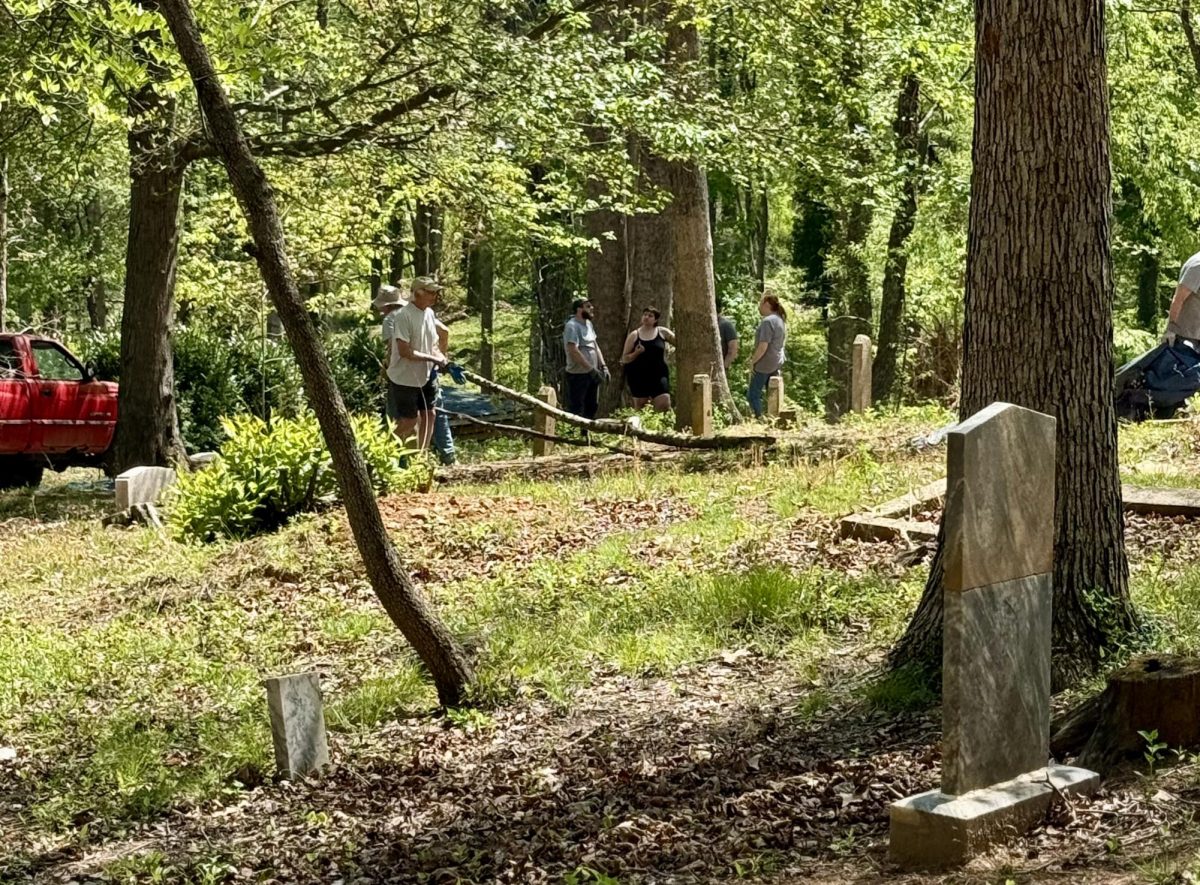
This research has been made possible with help from the Meadowview team at the American Chestnut Foundation, where they do a lot of the upkeep for the trees and give a lot of advice on how to keep them alive, along with support from Horton.
“I think my plan is to get my master’s in plant pathology,” Mick said. “I would probably be looking more at the conservation side.”
Plant pathology is the study of diseases in plants, such as blight, often found in agriculture, according to Mick.
“There’s a disease for everything,” Mick said. “Some are suffering more than others, so that’s kind of what it’s looking at— how to combat that and keep our biodiversity alive.”
Beyond the scope of science, Mick’s drawing concentration also consumes a lot of time outside the classroom and lab. Soft pastel works that explore religious upbringing— addressing the shame of being raised in the church as a queer individual.
“I always just wanted to do art, but then, you know, you can’t just do art,” Mick shared. “I was an art minor, but then I realized I wasn’t making art like I wanted to and it just got me really depressed.”
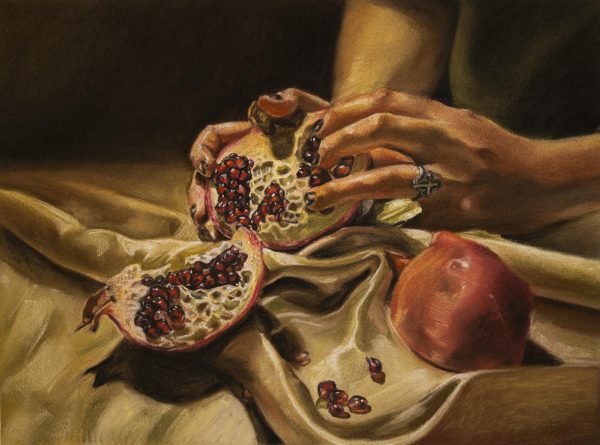
Mick’s love of art goes hand in hand with their love for nature. Growing up in Huntersville, Mick spent her time in a huge backyard that was mostly woods, often outside in nature, sharing moments with her dad, whom Mick credits for instilling in her a love of nature and conservationist ideals.
“I was always in the woods growing up; it’s always been my thing,” Mick said.
Research, ceramics, two studio classes and a lot of outside-of-class work— Mick balances it all despite a hectic schedule. It also helps to have found a few other biology and art double majors to relate to.
“It’s been really hard, but I think it’s worth it,” Mick shared.