





















The Supreme Court held oral arguments on Jan 13 regarding laws barring transgender people from women’s sports in Two cases escalating attacks on transgender people across the country.
The lawsuits – State of Idaho (Little) v. Hecox and B.P.J. v. West Virginia State Board of Education – made rounds through lower appeals courts starting in 2020, when Idaho became the first state to pass legislation banning transgender girls from women’s sports. That year, plaintiff Lindsay Hecox was the only college-level trans athlete in Idaho at the time the law went into effect. In 2021 Becky Pepper Jackson – B.P.J. – attempted to try out for her middle school track and field team but was also barred by a similar law passed that year in West Virginia.
In each case the lower courts ruled to halt the bans and overturned the restrictive measures. Both West Virginia and Idaho attorneys appealed the lower court decisions, spurred now to the Supreme justices.
North Carolina’s iteration of the ban – legislation known as the Fairness in Women’s Sports Act– passed in 2023. The law explicitly defines school sports as separated by the sex assigned to the person at birth, regardless of social or medical transition. The same law does not bar trans men or boys from playing on men’s or women’s teams.
Late last year the Department of Justice announced their decision to subpoena 20 facilities that provide gender-affirming healthcare to youth patients. The document describes transgender youth as , “mutilated children in the service of a warped ideology will be held accountable by this Department of Justice.”
In Trump’s inaugural address he declared, “As of today, it will henceforth be the official policy of the United States government that there are only two genders, male and female.”
An order he signed that same month reads, “These sexes are not changeable and are grounded in fundamental and incontrovertible reality. Sex is not a synonym for and does not include the concept of ‘gender identity.’”
Trump’s executive orders and the state anti trans laws influenced the NCAA Board of Governors to follow suit. NCAA President Charlie Baker made an official statement on the NCAA website.
“We strongly believe that clear, consistent, and uniform eligibility standards would best serve today’s student-athletes instead of a patchwork of conflicting state laws and court decisions. To that end, President Trump’s order provides a clear, national standard,” Baker said.
For transgender youth and students, especially young women and girls, these laws and rhetoric cause real harm on and off the field.
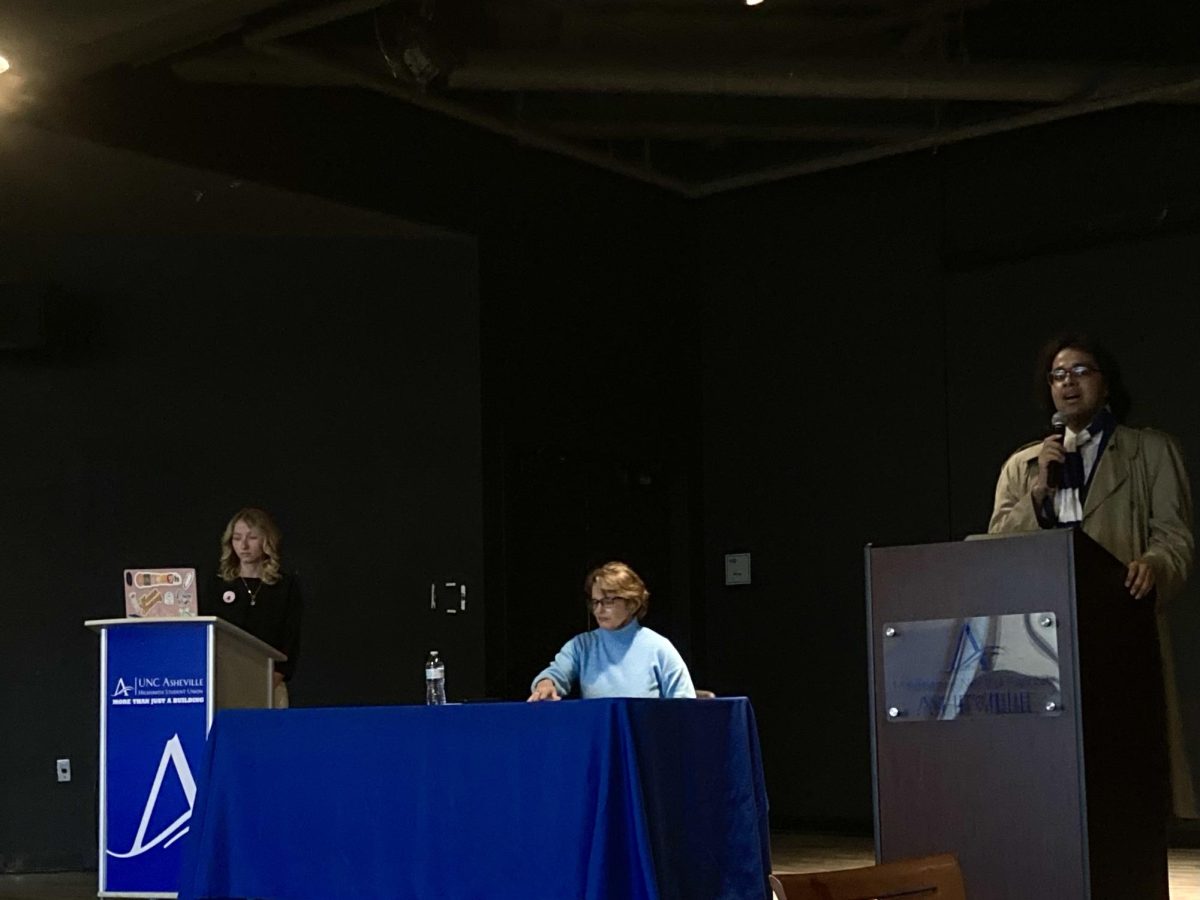
UNCA sophomore Yuri Rusnac, said she believes simultaneous blocks to transgender healthcare expose the real motivation behind these laws. “I think it signals that the justices care more about inflicting pain on a precarious minority than they do about upholding semblance of justice or equality, it’s elimination through and through,” Rusnac said.
According to a statistic from the National Institute of Health’s government website, 82% of transgender people have considered suicide and 40% have attempted suicide. In states that have passed anti-trans legislation, the number of attempts soars to 72%.
“The thing with trans bans in sports or healthcare, is it’s based on this bunk idea that trans women are at some sort of advantage, which is evidenced nowhere. In every statistic trans women especially trans women of color are disadvantaged in every way,” UNCA freshman and music tech major Stella M said.
The Lemkin Institute on Genocide Prevention reports that experts warn the U.S. is in the early stages of a genocide against transgender Americans with anti-trans laws in 27 states. The study notes that during the 2023 CPAC, conservative commentator Michael Knowles called to “eradicate” so-called “transgenderism” from public life. The Lemkin Institute also points to the Trump administration removing “non-binary” from passports, no longer allowing gender marker changes to passports and the cutting of all federal funding to LGBTQI+ research. All signs of an oncoming mass atrocity.
Assistant Professor of Sociology at UNCA Blu Buchanan focuses their research on these types of everyday acts of violence.
“Nothing the opposition is proposing is new. It’s rooted in gender pseudo-science. It’s important that we realize that these attacks are not about sports, or equal opportunity. It’s about regressing to racist and sexist ideas about ‘separate but equal’ facilities. US history shows the failure of such ideas. They want to create a new tier of second class citizenry in response to the hard fought rights won by the Black, LGBTQI+, and women’s rights movements,” Buchanan said.
Professor Buchanan pushes for students to study the history of struggle by oppressed groups at UNCA and in the US. Former UNCA student and community organizer Claire Clark champions the importance of that history for determining the future of the university, the state and the country. She says that these most recent attacks on trans rights are part of a broader attack on the progressive gains won over the last 90 years by the working class.
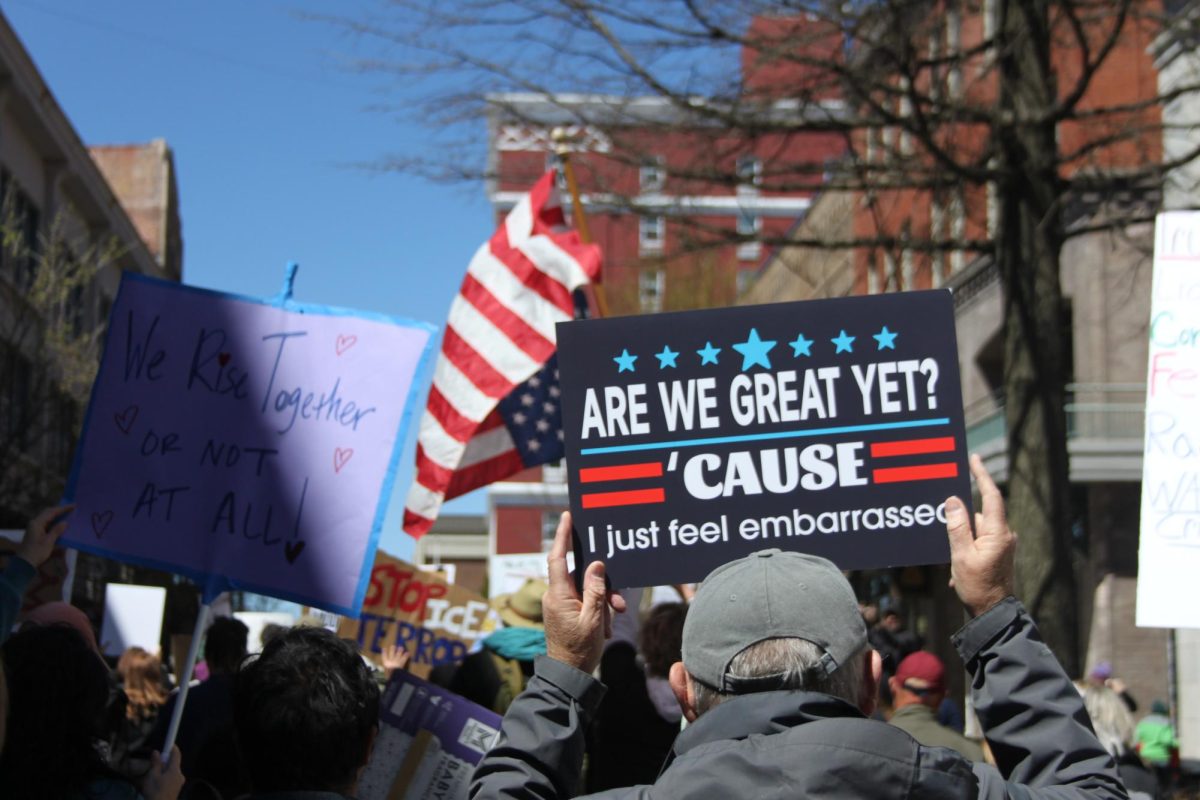
“The road forward is to bring the struggle for trans rights into the center of a broader struggle to beat back these far right attacks. A mass movement of the working class can and will beat back this agenda. We look to Minneapolis, to 2020, to the Civil Rights movement. We must unite and fight,” Clark said.
A decision on the two cases won’t be handed down until spring. The Supreme Court ruling could have a ripple effect for North Carolina law and the athletes at UNCA.