




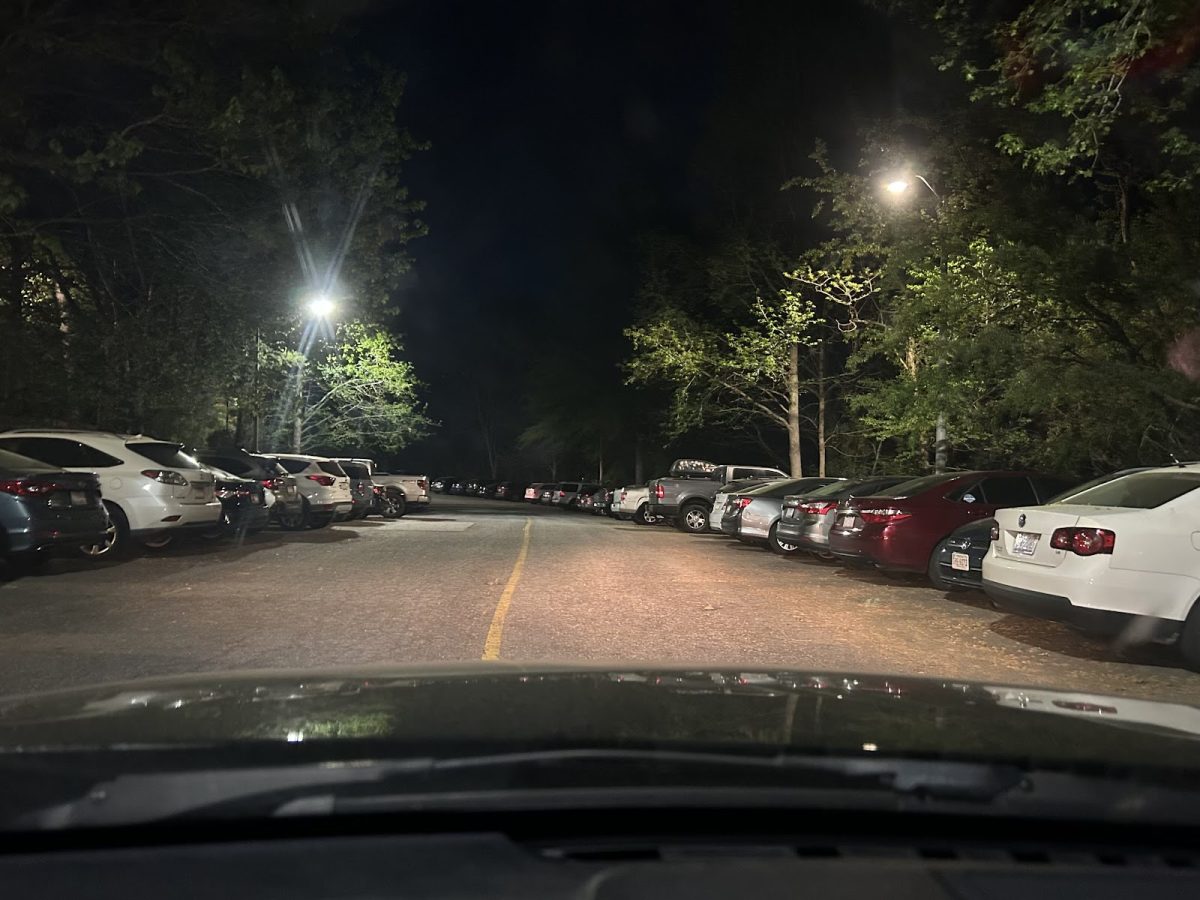














If you went shopping Friday afternoon, Jan. 30, you likely experienced something overwhelming: no parking spaces, empty shelves, people weaving their way through each other and the constant beeps of purchased items layered with the white noise of conversation. This was the result of the Asheville population rushing to stock up on necessities to prepare for the second winter storm of January. This storm is forecasted to hit Asheville only a week after the last ice storm that hit on Jan. 23.
This rush to prepare for an incoming storm doesn’t just come from nowhere. For Asheville and its population, a back-to-back weather event causes people to think about Hurricane Helene’s impact on Asheville, a storm that caused widespread flooding, infrastructure damage and outages of both cellular services and power. Students at UNC Asheville say that Helene changes the way they prepare for these incoming weather events.
“I went to Harris Teeter and spent nearly $100 on bread, butter, snacks and salmon,” said Jensen McDonald, a junior at UNC Asheville. “Helene was definitely in my mind as I was shopping for groceries.”
But McDonald wasn’t alone in preparing for last week’s winter storm. He said the aisles were cleared as a result of everyone rushing to prepare for the worst.
“The bottled water section was completely cleared and picked over,” McDonald said. “There was definitely a heightened effort in preparation among people in Asheville. How little people were prepared for Helene was all people were talking about in the store while I was shopping for supplies.”
The grocery store is not the only place where the long lasting effects of Helene are noticed. Everett Quinto, a junior and resident assistant at UNC Asheville, said the university staff was briefed extensively before the storm’s arrival.
“They prepped us pretty well,” Quinto said. “We had a meeting where we went over a bunch of emergency plans. We had a plan for on-call, we had a plan to deal with snow and power outages and whatnot.”
UNC Asheville cancelled classes on Jan. 26 and Jan. 27 because of last week’s storm, one of many precautions Quinto said might not have been taken if not for Helene.
“I definitely think that Helene played a role, because we’ve seen what happens when we’re unprepared,” Quinto said. “But I’d rather be prepared and nothing happened than not be prepared and bad things happen.”
UNC Asheville said in its official response, “As with all incidents, including weather events like Helene, that impact the UNC Asheville campus, the University reflects upon its processes and operations to improve its emergency preparedness and response.”
The university said they have improved their emergency response since Helene, and have ensured supplies and staffing in preparation for the winter storm last week.
“The University enhanced its ability to communicate effectively and consistently, improved its energy resilience, and purchased new equipment to upgrade the emergency response capabilities of its Emergency Operations Center,” the university said. “The University ensured it had ample resources readily available, including food, water, snow and ice clearing materials, and staff. It also developed a comprehensive communications plan to ensure the entire campus community was well-informed about preparedness and the potential for interruptions to campus operations.”
McDonald said last week’s storm behaved differently than most people were rushing to prepare for and that it was not nearly as bad as the forecasts predicted.
Dr. Christopher Godfrey, professor and chair of atmospheric sciences at UNC Asheville, said he heard people were disappointed with how they prepared versus the result of the actual storm.
“The issue with this particular storm was ice. Early on, the models actually caught the storm pretty well in advance. But early on, the models thought that it would be cold enough to sustain snow,” Godfrey said. “We were looking at model forecasts a week out looking at 10, 15, 20 inches of snow in some places. But numerical models are just our attempt to figure out what the atmosphere will do.”
Godfrey explained that when we got closer in time to the actual event, a warm layer showed up and it became an icing event rather than a major snow storm like many others prepared for. Godfrey said people are more cautious when it comes to weather events because of Helene and because people saw what weather can do.
“I think a lot of people around the area are a little more cautious after Helene, When they get a warning about power outages, they might take it a little more seriously now,” Godfrey said. “We want people to be prepared and I think Helene helped people to focus a little bit more on the weather and focus a little bit more on preparation.”