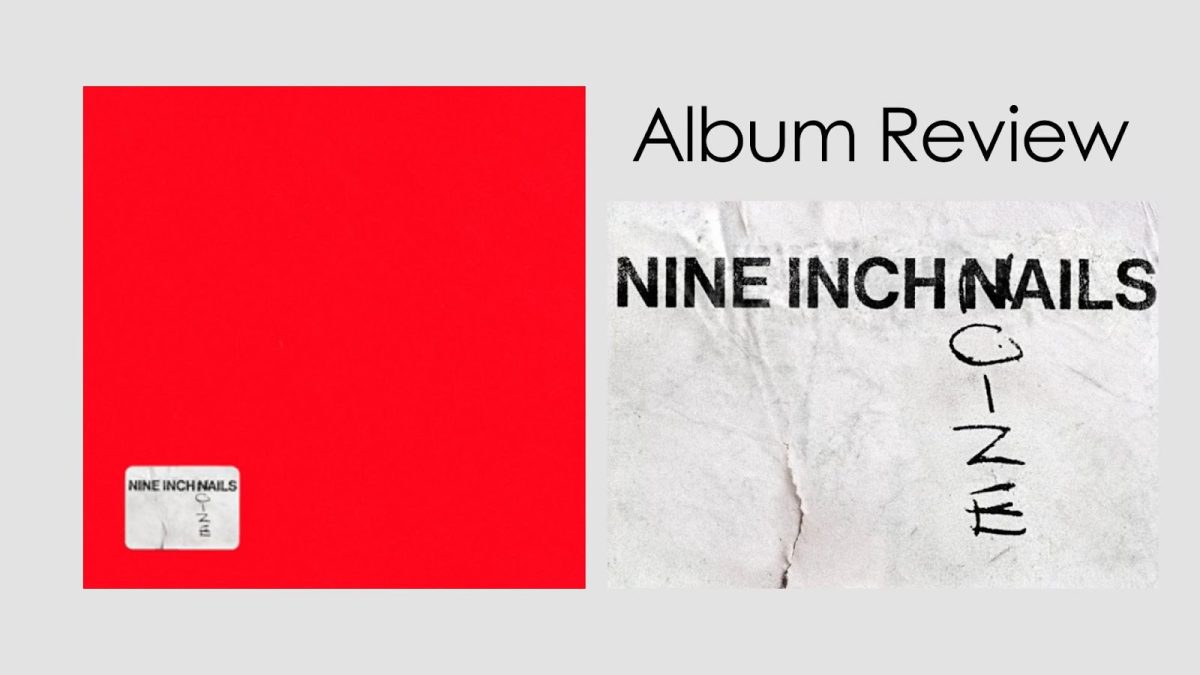









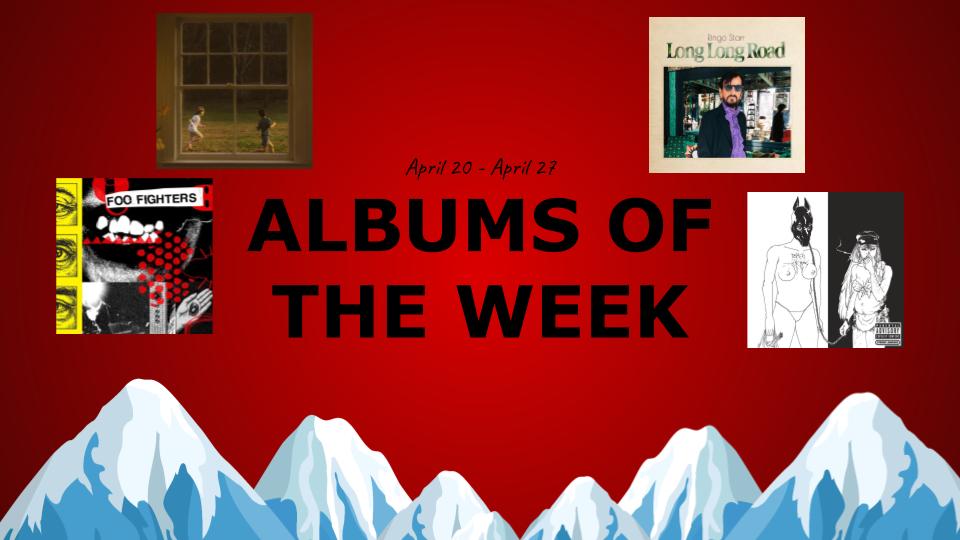

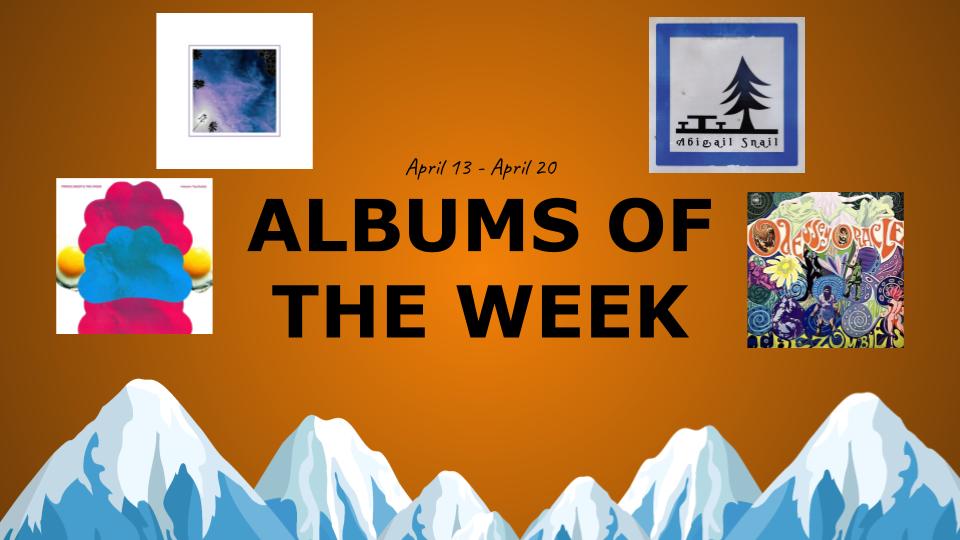





This week, I’ve got another four albums for your listening ears. There will be three new albums from the past week (on a monday to monday basis) and one classic album we’re celebrating the anniversary of.
Just a reminder: if there’s an album YOU want to see covered that we missed (or a review that you disagree with) write a review of your own and submit it right here!
My Ghosts Go Ghost – By Storm
8.1/10
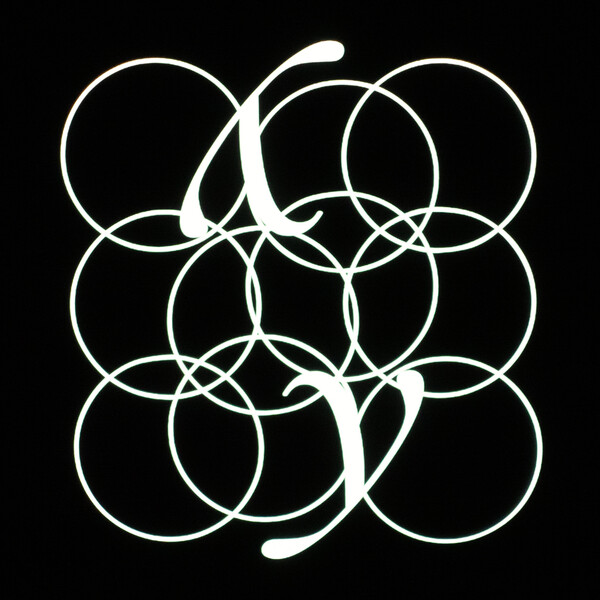
Once, there was a band called Injury Reserve. They put out two projects that pioneered the art-rap genre, fusing glitch and electronic music to make glitch hop, a gorgeous abstraction of the genre, and their final record was their magnum opus, “By The Time I Get to Phoenix”. This though, is not an Injury Reserve record. Following the death of one of their founding members, the remaining two formed this group– By Storm– and while the various singles have been great showings, this is their first full-length album.
While Injury Reserve’s work was an epic collage of electronic sound presented to you in these bombastic showings, By Storm is going for a more laid-back vibe than the genre typically provides. It’s not really even glitch-hop, it’s more experimental, psychedelic hip hop with some glitchy elements. I’m not one to complain though, I love the new atmosphere created here.
The record is clearly about the death of their former bandmate– though they’re not exactly mourning him. It’s difficult to fully express the vibes here, but I’d say more than anything it feels reflective of the mourning process as they heal and grow after it. Less so is it about the mourning itself.
There’s a lot of references to Injury Reserve throughout here. There’s a few cute nods to previous songs of theirs, like in “And I Dance”, the line “Look up at the sky, it’s all auburn” is a nod to the Injury Reserve song “Footwork in a Forest Fire”. Even the band name, By Storm, is a reference to an Injury Reserve song titled “Bye Storm”.
I really enjoy this record. My first listen I wasn’t as into the more reserved (haha), chill atmosphere created, but more than anything that makes the occasional sound explosions a lot more rewarding. It’s not until 30 minutes into the record that we get our first real whiff of the power that Injury Reserve used to put into their songs– and it’s total catharsis. It’s like finally realizing that your friend is truly gone after a long, difficult period– which is exactly what I feel the entire album is about.
Once that first explosion hits you on “Double Trio 2”, it follows up with the absolutely gorgeous “And I Dance”, probably the closest thing to a true Injury Reserve track here. Though it closes with “GGG”, which matches the rest of the album in energy more, that back-to-back selection of glitchy art rap songs is the highlight for me.
There’s a lot of varied influence from outside the hip-hop space too. The first couple tracks have a really nice folktronica feel and there’s almost an art-pop influence with some of the synthy grooves at times. I could pick out influences from ambient to breakbeat to even post rock at times. I think it’s a great representation of the kind of whirlwind your life is sent into after losing a loved one.
I hate to say it after harping on the beautiful symbolism of the genre change for so long, but hearing the grandeur of “Double Trio 2” made me realize that I would just like a glitchier record. Yes– this is obviously insensitive. There’s no way to perfectly replicate that epic collage sound from “By The Time I Get to Phoenix” without one of their founding members, but I can’t help but hear whispers of their original vision in the last fourth of the album that just make me wish they had gone even crazier.
I really respect the new creative decision here, but for the most part I just kind of wish they had gone for something bigger. I look forward to seeing more records from By Storm, because when this album peaks, it’s some of their best output yet, but some of the earlier songs feel like slogs compared to them.
Spring – Quiet Commotion
7.6/10
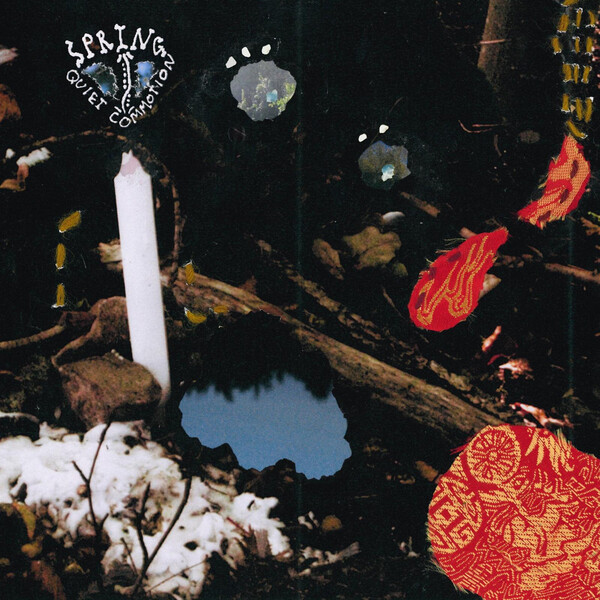
It’s winter in Sweden. It’s dark nearly all the time. Harsh winds make it hard to go outside for even a short amount of time. Quiet Commotion walks us through what life is like during this state of pervasive darkness.
The entire record captures this feeling so, so perfectly. The warm guitar sounds counteract the cool woodwinds so well, encapsulating the warm inside versus cool outside with such a simple dynamic. They’re played with such juxtaposition also. The electric guitars and drums are played like a classic indie pop piece, but the woodwinds and acoustic are reminiscent of indie folk, or even singer-songwriter at times.
Lots of tracks combine these elements in such a charming way, I can’t help but smile. The combination of clarinet and electric guitar on “… And Buried Glow”. The combination of a The Doors-esque organ rhythm with a damn banjo on “In The Snow”. There’s no shortage of back and forth between genres here.
The vocals are also very enjoyable. Very lo-fi, but to Quiet Commotion’s advance no doubt. There’s almost a radio effect with the lower mic quality that gives this impression you’re getting a signal through the harsh winter at some camp. You can truly imagine this album being the last thing keeping you sane as you listen beside a dwindling fire in the Swedish wilderness.
There’s a good variety of tones here too. Tracks like “The Colder It Gets” feel chilling almost, with dark acoustic guitar riffs and haunting vocals. With other tracks though, like “… And Buried Glow” they may as well be a folk rock piece with its upbeat drums and classy riffs.
I don’t have too much to say about this record, it was a nice time and on the coldest days I’ll certainly be returning to it.
I Used To Go To this Bar – Joyce Manor
1.6/10
Bands losing their edge is not surprising. In fact, the grittier that an artist’s early work is, the more corporate that their later outings seem to feel. Any metal, punk– any sort of alternative rock band follows this. As far as power pop goes, I actually quite like Joyce Manor. They utilize a pretty pleasant emo pop sound that pushes their work ahead of contenders like Jeff Rosenstock.
This album was not good. I’ll be very straight about that. This terrible, corporate sheen is on every track and it borders on ai-generated at times. The vocals are uninspired, the occasional guitar solo makes me feel nothing and there’s not a single riff that I can really recall from the album. That last note is really upsetting because Joyce Manor’s riffs are probably the biggest appeal.
Take a look at a track like “Well, Whatever It Was”. The lyrics are fine– standard slacker rock stuff, but that’s as far as positives go. The track really sounds like it’s from a video game OST with how boring the production is. There’s an attempt at some cool backing vocals, but they fall totally short because of how uninteresting they are. The guitar solos are alright, kind of cute, but don’t really serve a purpose and really sound like it’s their first time discovering scales. There’s even a square lead that comes in as a counter melody in the second half but again, I repeat myself: it is totally uninteresting!
That’s just one track but that criticism could be applied to any of the NINE tracks that plague this album. The ai-generated accusations are obviously not true but man, do so many of these tracks pass for it. Just lame, uninteresting slop. It sounds like you fed ChatGPT the worst of Weezer, the worst of Smash Mouth and the latest Taylor Swift album and asked it to produce a “trendy indie rock record”.
All of the “innovations” are just meaningless to me. It could be a piss-poor try at a “spacey” piano riff on “After All You Put Me Through”, or a folky spin on “All My Friends Are Depressed”, they all just totally bounce off me.
It hurts my heart, really. One of the only good parts about this album is, true to their sound, each track is only really clawing out your eardrums for two minutes or so. Out of the nine songs, one track– “I Know Where Mark Chen Lives”– sounded ANYTHING like the Joyce Manor that I love. Some of the vocals and lyrics on “The Opossum” were cute too. One-and-a-half songs out of nine is about 16% so… 1.6/10. Hang them up, Joyce Manor.
Let My Children Hear Music – Charles Mingus
9.9/10
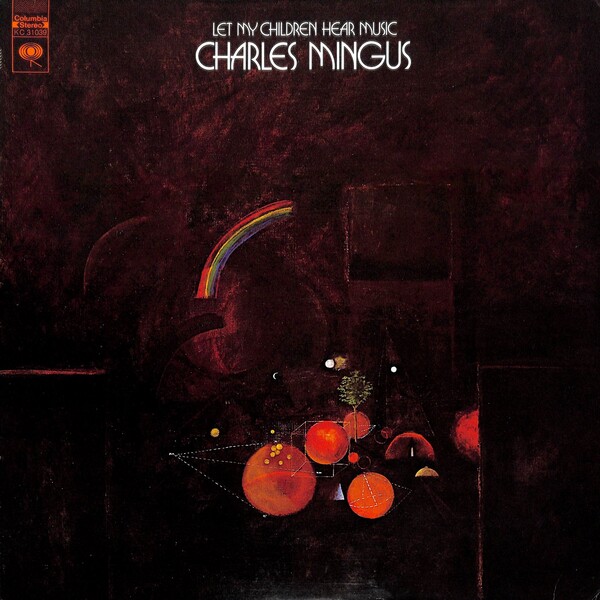
Charles Mingus is perhaps my favorite jazz songwriter of all time. Since the late ‘50s, Mingus pushed the boundaries of the genre with his avant-garde writing style. Whether it’s his more traditional post-bop outings among the likes of “Mingus Ah Um” or a groundbreaking, bizarre symphony like “The Black Saint and The Sinner Lady”, he’s offered countless conventions to jazz throughout his 20 year album career.
While I’m of the opinion that his aforementioned “The Black Saint and The Sinner Lady” is a contender for the greatest album of all time, he would follow it up with a more traditionally structured record in 1972 with “Let My Children Hear Music”. The album is a lush, epic adventure through a storybook of big-band Mingus pens featuring anything from spoken word poetry, to elephant sound effects.
Despite the contemporary album cover and daunting introduction of the first track “The Shoes of the Fisherman’s Wife Are Some Jive Ass Slippers”, the album is downright playful throughout its runtime. “Adagio Ma Non Troppo” keeps you on edge with its precarious string tones, but is still bouncy throughout. “Don’t Be Afraid, Clown’s Afraid Too” is filled with circus-like tunes and a deep bobbing tuba throughout– not to mention the elephant. “The Chill Of Death (Recitation by Charles Mingus)” features a beautiful poem about death written and recited by Mingus over tense, dark tones.
That first track, “The Shoes of the Fisherman’s Wife Are Some Jive Ass Slippers” I could probably write an entire article about. It utilizes this daunting, dantean buildup, creating dark harmonies with its vast horn section, pounding timpanis and subtle piano flourishes to trick the listener into thinking they’re in for a meeting with the devil. It’s not until the rhythm section fully kicks in and the track gets into full swing that you realize you’re not meeting with Satan from hell, but perhaps a looney-tunes-esque depiction of him. It borders on goofy at times, plunged trombones and all.
While there’s a quick bridge to reprise the introduction– it never leaves you in the dark for too long; hastily jumping back in with a saxophone solo followed by a trumpet solo before they duet. The track– at just over nine minutes– manages to cram so many ideas and repeated motifs into such a short amount of time. It’s the absolute highlight of the album.
There’s a huge variety of instruments that Mingus writes with here that aren’t traditionally in a jazz band, likely due to the classical influence. The album is what’s now referred to as “third-stream”, a combination of big-band and classical orchestration. I almost never go for classical music myself, but the way Mingus blends elements of it into the many jazz pieces is astounding. Acoustic guitar, french horns, clarinets, cellos even, all played in such a way that doesn’t quite sound exactly like jazz, but brings out the jazziness of the saxophones even more.
It would of course be foolish not to mention the man at the helm of this masterpiece. Mingus is not a mere conductor, he’s on each of these tracks as the bass and my god– what phenomenal basslines. The bass does exactly what you want it to do and more– it’s pushy but not forceful, it’s rhythmic but doesn’t detract from the drums, it props up every melodic lead in such a perfect fashion I shake my head in joy every time I catch a line Mingus plays. And that’s to say nothing of when his bass is the focus. While not as common in these larger-than-life productions, when he gets a bass solo, it’s always beautifully played.
Really, I could go on forever about this record. I really do not have any critiques about it– the only reason it’s not a 10/10 in my eyes is because I simply like a few other albums more. In my eyes, the album is still perfect. This album is over an hour long and not one second of it is wasted– it’s a masterpiece in every sense of the word.