




















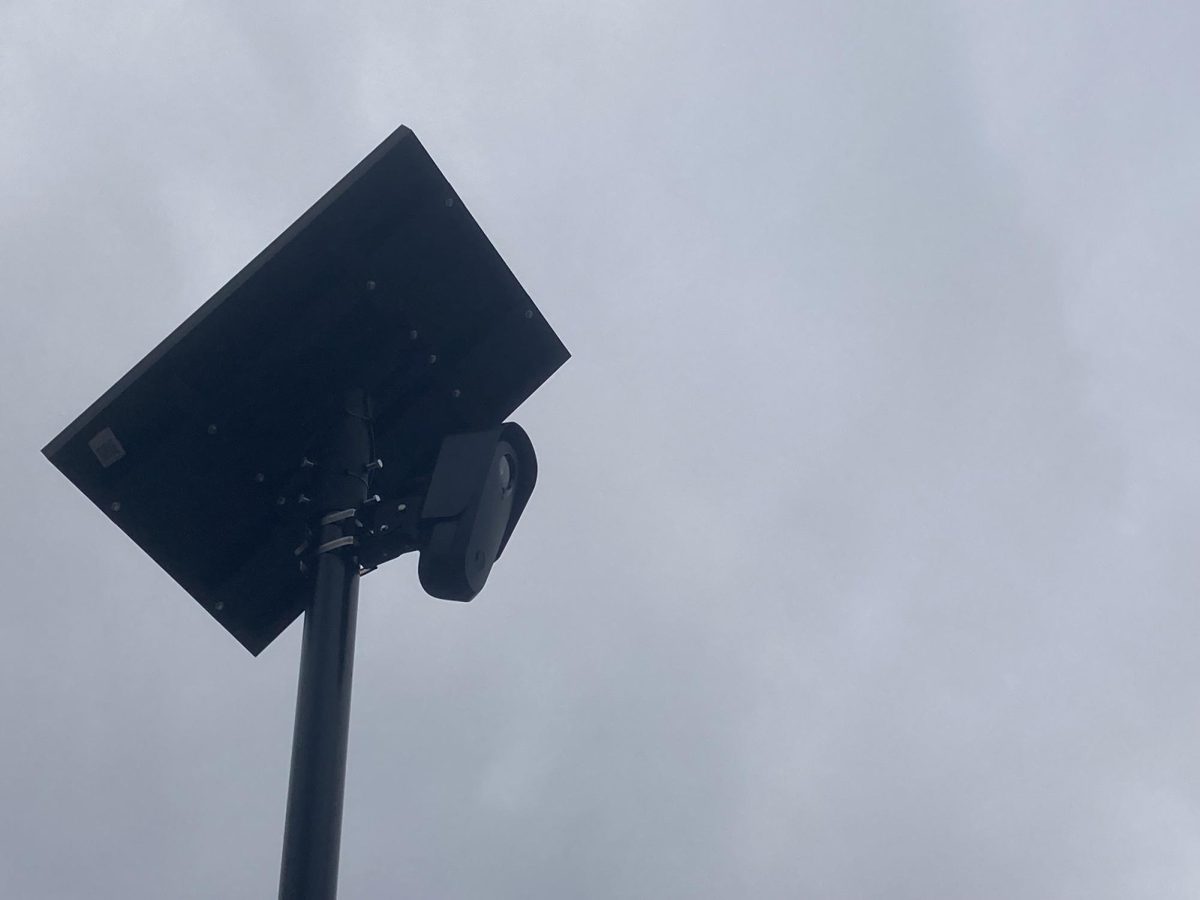
At the University of North Carolina at Asheville, students and staff this semester may see a black pole located on campus, this is part of an A.I surveillance system. This is part of the new security system revamp by the university.
This system was installed during the fall 2025 semester. A less specific date was unable to be provided by the university, however, according to a Nov. 17 email: “As part of this project, some Blue Light Phone Stations across campus will be removed, and the remaining stations will be upgraded to the most up-to-date technology. The updates are currently scheduled to start the first week of December with a target completion date of Dec. 31, 2025.”
The accurate information regarding their installation was “not readily available” according to university officials.
It is a nationwide surveillance system, where the footage and information it collects is processed by A.I. It is unclear how many Flock cameras are in usage, but as per Flocks website, over 20 billion license plate “reads” occur each month in 49 states, across 5,000 communities and are used by 4,800 police departments.
Access of footage from one flock camera system to another does not require a warrant.Within the state of North Carolina, readings of the license plate also does not require a warrant, according to UNCA chief of police Daran Dodd.
Most of the research to implement was acquired via input from other police departments, but as well directly from flock itself. There was little to no outside research collected on flock during the decision making process to install the Flock system with university funds.
One of the main draws Flock says is its ease of usage.
“City staff shouldn’t be burdened with managing contractors, IT teams, permits, or infrastructure for public safety hardware. Flock handles everything, from permitting and installation to maintenance, ensuring quick deployment with minimal disruption to city operations. When an agency chooses Flock, it’s not just buying a device—it’s getting a complete, turnkey solution”
According to Flocks website, it is unlike other vendors that requires cities to rent utility pole space, by Flock cameras providing the poles and managing the full process.
A utility provided by the flock system is the license plate reader, “ALPR”, automated license plate reader. UNCA says its system only acts as a license plate reader. However there is contradictory reporting. According to the EFF, multiple agencies used the flock system and network to target activists.
“When we obtained datasets representing more than 12 million searches logged by more than 3,900 agencies between December 2024 and October 2025, the patterns were unmistakable. Agencies logged hundreds of searches related to political demonstrations”
The University does not use cameras designed for tracking people, however all footage is stored for 30 days on a cloud network, University officials said.
Flock denies that the surveillance system has been used for other abuses, like the search of women seeking abortions.
“We are unaware of any credible case of Flock technology being used to prosecute a woman for reproductive healthcare or anyone for gender affirming healthcare.”
Despite Flock’s claim, 404 Media found different reporting.
“Earlier this month authorities in Texas performed a nationwide search of more than 83,000 automatic license plate reader (ALPR) cameras while looking for a woman who they said had a self-administered abortion, including cameras in states where abortion is legal”
Certain Flock systems have noise detection and audio recording capabilities; gunshots, screams, shouts, etc, which may alert the client of the flock network, but it is not directly interactable like the university’s older blue tower system, providing a direct channel for aid.
“Every case has its own nuances.” Dodd said in regards to Flock.