











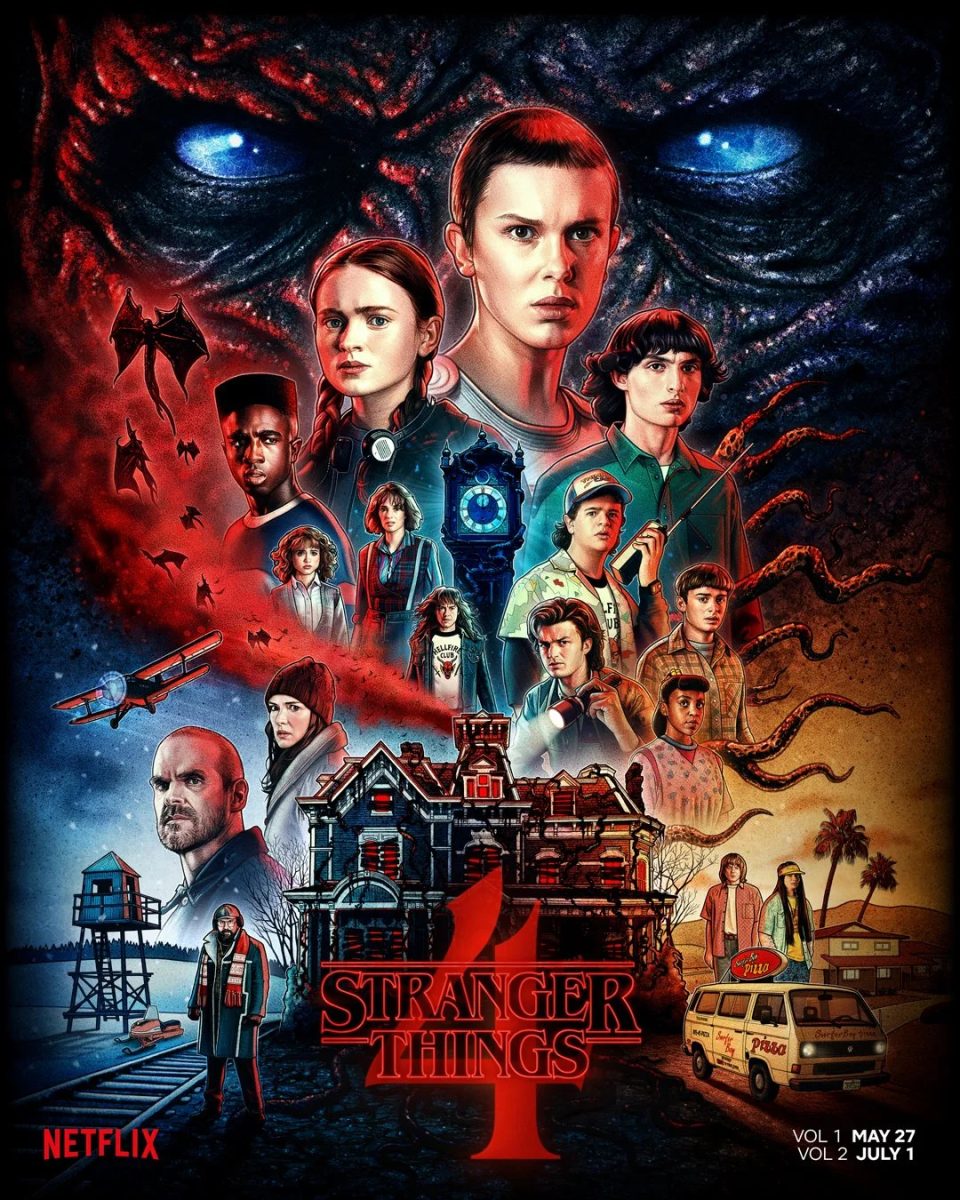





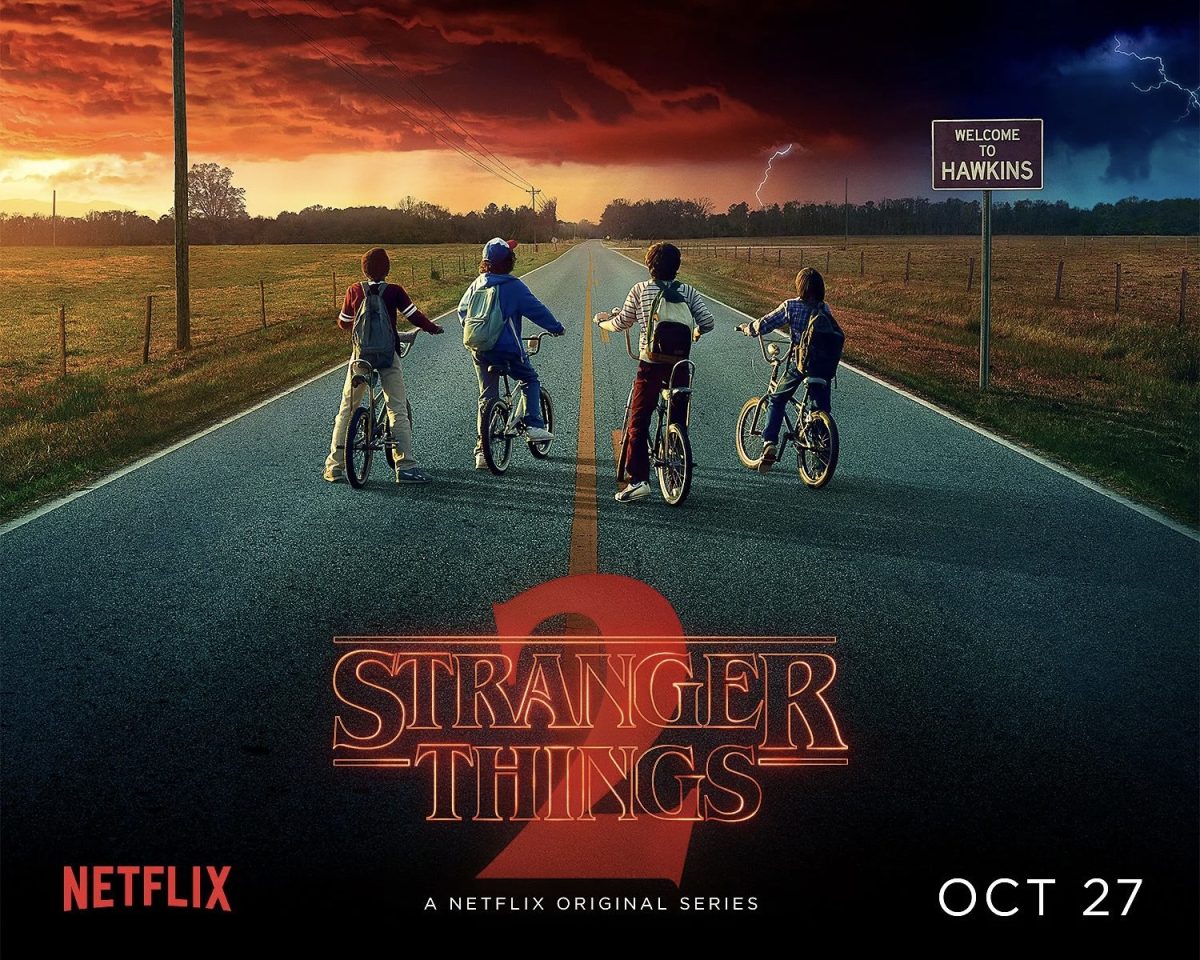
This is the second installment of a series of reviews of the Netflix series Stranger Things. To read a review of the first season, click here.
Before writing each of these reviews, I make the effort to rewatch each season. Before this undertaking, if you asked me what my favorite season of the show was, I would say it’s a debate between seasons one and two. But having relived the second season, there is no debate.
In my last review, I praised Stranger Things, particularly for its characters and its use of horror. I’m happy to say that I can do that once again because the second season did what any successor to a great story should– expand.
Stranger Things season two takes place about a year after the first season ends. Will has returned home, and everyone involved in the adventure has been forced to keep the whole thing a secret. However, a new adventure begins to brew as crops mysteriously start dying, Will starts having flashbacks to the Upside Down, and Dustin discovers what he believes to be a new species of amphibian.
What I love most about this season is the way it builds on what came before. There aren’t any big new concepts introduced that can’t be directly tied back to what the Duffer Brothers showed us in the first season. My favorite example of this is how the show explores how the characters are feeling after the last adventure.
There are pretty major things like Mike grieving Eleven (El) and vice versa, but the show even shows how the death of Barb is affecting Nancy and gives real weight to the characters not being able to tell people about what happened. In so many other shows, the death of a character with so little screentime would be glossed over, but it ends up being Nancy’s driving force this season.
Along with individual character arcs, we also get to see how the characters are interacting with each other after everything that happened. Nancy and Steve are feeling tension, Hopper has gotten closer to the Beyers family, and everyone gets more protective of Will. It’s also really nice getting to see the friendship that was built up between Will and the others in the first season actually play out beyond a single DND game.
This season dedicates a lot of its time to Will, as it should. It would have been such a missed opportunity not to go into how he was feeling after basically being trapped in Hell for days. But they take it a step further and use Will to further flesh out the Upside Down as well.
Before, it was just this toxic, evil place on a different plane of reality that a monster might creep out of, but in this season, its existence actively threatens to destroy the town of Hawkins. Not only do we get to learn more about the Upside Down, it also becomes much scarier and makes every scene involving it feel more tense both going forward and retroactively.
Adding to the tension is the score. I failed to praise the soundtrack in my first review, but it does a lot of heavy lifting when it comes to building the atmosphere. When it’s not being used to hype up the Demogorgon, the music becomes these 80’s songs that just work to sell the time period and the vibe of being a teen or a kid during this time. Yet again, another great use of nostalgia.
This show also deserves praise for knowing when not to use its score. It’s really good about this with Eleven specifically. Whenever she astral projects, the music goes quiet to sell the serenity of what’s happening.
On the topic of Eleven, she also gets as much screen time as she deserves. This season, she gets to explore the world on her own instead of relying on Mike, which makes their relationship less iffy. It’s honestly kind of amazing how the two are barely together this season, but you still understand how much they care about each other based on the actions they take because they’re not together.
Helping with El’s journey is Jim Hopper, whom I neglected to talk about in the first review, but will be a main focus going forward. Hopper’s character is meant to be an homage to the cowboy cop archetype of action heroes that was popular in the 80s, but he goes beyond that by being allowed to have emotional intelligence.
Hopper gets to foster a father-daughter relationship with El this season, and it’s not hard to see the parallels with the daughter he lost years ago. It would have been incredibly easy to have a plotline where Hopper doesn’t know how to raise a daughter by himself, but that’s not the case here.
Hopper does a fine job taking care of El; he’s just a tad overprotective and struggles to meet El in the middle when it comes to her wanting to leave the house. And he does this while still being a cool 80s action hero when the time comes. Jim Hopper is proof that writers can have their cake and eat it, too.
The last thing I wanted to touch on are the new characters that were introduced this season. I find them all to be likeable in their own way, and they each do their respective jobs of serving the plot really well. It feels like there was a lot of intentionality behind their inclusion.
Three of them are introduced naturally enough into the plot, but there’s this new guy, Bob, who’s dating Joyce before the season starts. He kinda comes out of nowhere, but his existence isn’t detrimental to the show. It just would have been nice to actually see Joyce meet him before he started living with her and her two kids.
Stranger Things’ second season takes everything good about the first one and just makes it better. You really can’t come up with a better recipe for success. Though I am sad to report that this review will be where my praise for the series peaks.