
















Behind barbed wire and armed guards, where many see only criminals, some see eager students.
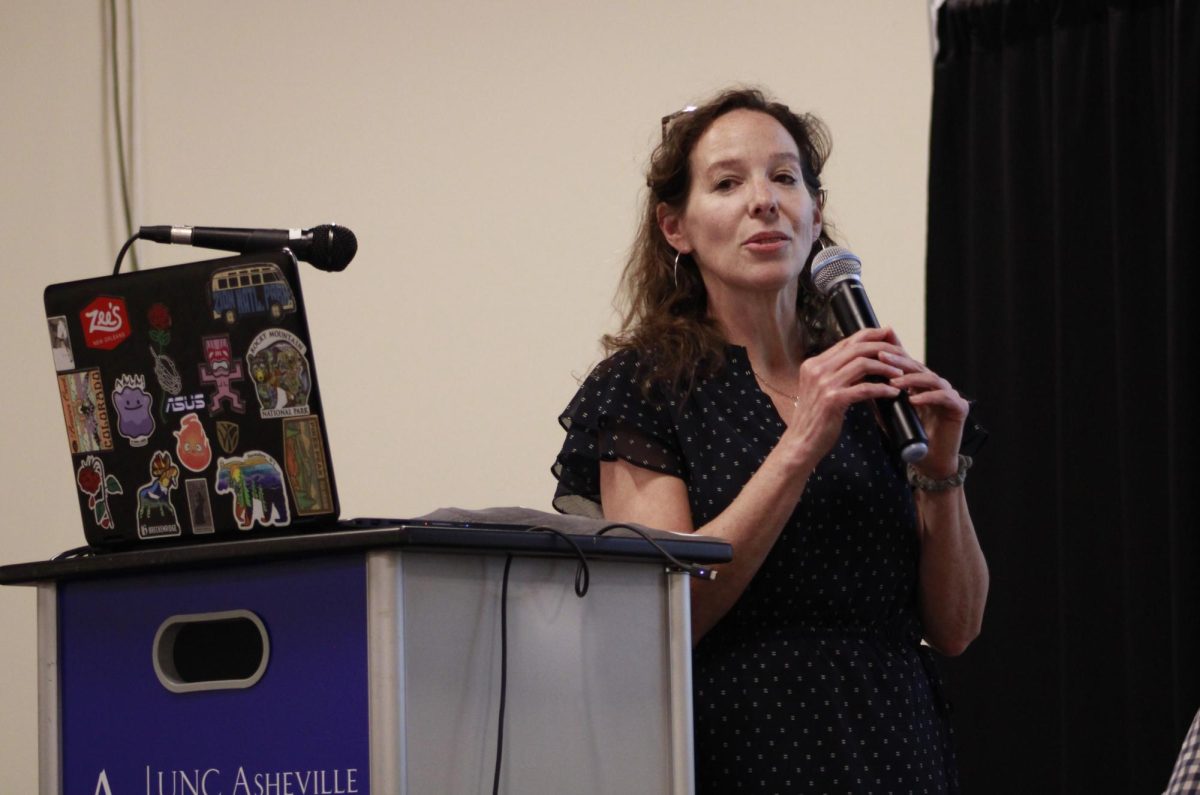
Leslee Johnson knows how to stay busy. She teaches writing and humanities courses on UNC Asheville’s campus. She helps publish a community newspaper called The Intersection. She’s a board member with the Asheville Poverty Initiative and she has been in and out of prison for the past 8 years. The last four of those years serving as director of UNCA’s Prison Education Program.
“There’s a beautiful moment when students surprise themselves; as writers, as critical thinkers and creators dawns on them. That really stands out to me. That is what education is all about, why the program is so vital,” Johnson said.
Professors at UNCA have taught college courses and workshops to inmates dating back to the 90s. Through a patchwork of grant funding and volunteers, courses from computer sciences and statistics to humanities and writing have been offered at multiple prisons across Western North Carolina.
“In 2004 I worked with English professors who would talk about teaching at Craggy Correctional and I thought – If I ever get the chance to do that I’d be lucky,” Johnson said.
By 2009, in the economic ebb of the Great Recession, the bulk of funding and political will to develop education behind bars dried up. At the time, the total number of people in jail and prison was at an all time high of 2.3 million, according to the Bureau of Justice Statistics. Nearly a decade passed without any consistent curriculum offered to inmates.
Then in 2018, UNCA instructors Scott Walters, Regine Crisner and Walter Bahls spearheaded an effort to reinstate a credit-bearing curriculum for incarcerated people. After securing a $150,000 grant and partnering with Avery-Mitchell State Prison, the newly created Prison Education Program accepted 15 students at the facility. Three years, one pandemic and 60 credit hours later, two students – Micah Hayes and Matt Ellington – graduated from the program. Both went on to pursue a degree after release and chose UNCA.
“I felt an obligation coming back to the school and to help the program grow. To give back to people going through what I experienced. At the darkest point in my life, education was a light in the tunnel,” Ellington said.
Last year Ellington enrolled as a double major in Applied Physics and Chemistry, making the Chancellor’s List in the Fall, all while serving as Communications Coordinator for PEP. A huge undertaking for any student, let alone a 35 year-old just off a 9-year sentence working multiple jobs. The connections he made with faculty while in prison and the support he continues to receive on campus are indispensable to his success.
“The opportunity here to fulfill my dreams, where I don’t have to step into the world so vulnerable and put myself at the expense of somebody who doesn’t care about me, about my story. That’s important,” Ellington said.
Hayes graduated from UNCA with a 4.0 GPA in 2023 earning his degree in Mass Communication. Upon his release from Avery-Mitchell in 2021, Hayes knew UNCA was where he wanted to continue his education. In no small part because of the deep impressions his teachers and the program made while he was incarcerated.
“In prison, people are made to lose their sense of purpose. The curriculum, humanities and philosophy, really heavy stuff – it changed me. It opened my eyes to another world. I felt I had purpose again,” Hayes said.
Following Haye’s and Ellington’s graduation from the program, the COVID-19 pandemic, a new warden and Tropical Storm Helene, Avery-Mitchell ended the direct partnership with PEP in 2024. Johnson, serving as the new director, was motivated to continue prison education through UNCA. In large part because she received so many letters from incarcerated students.
“I went to the administration and told them to let me take this on, there’s such a desire for education on the inside. There is a hunger for learning,” Johnson said.
Unable to reach inmates serving extended sentences, she turned to the Buncombe County Detention Facility. Detainees at BCDF are not permanent, nor have they been convicted of any crime, but are often held egregiously long – unable to make bail and awaiting trial. As of April, 35 people had spent over six months in the jail and 42 had been detained for more than 12 months. Here, Johnson saw a glaring gap in education and was convinced there was value in bringing PEP to those caught in pretrial bureaucracy. Luckily she wasn’t alone.
For 20 years Michael Holton worked as a teacher in the Asheville school system. Now an officer at BCDF and Detention Facility Program Coordinator, he is the top proponent of growing the relationship with UNCA. Learning, he says, counters the isolation and stigmas of jail by cultivating an environment of connection.
“Watching detainees grow mentally and educationally but also spiritually within themselves has been a blessing,” Holton said.
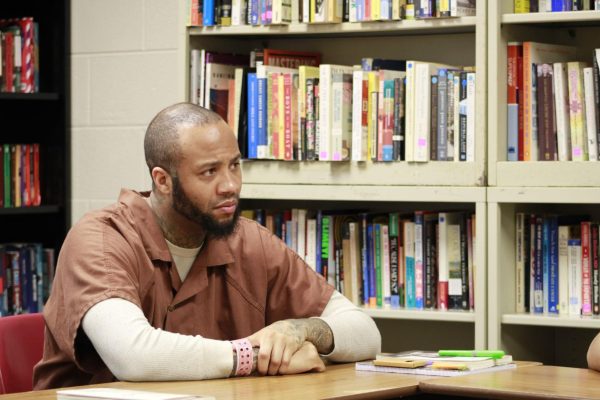
Currently, the program is still finding its footing at BCDF. As of the beginning of this year, the last of a second grant from the Laughing Gull Foundation was spent. Absent funding to cover tuition costs for college courses, Johnson tapped community leaders and her students to keep PEP in step. Her class delivered the ideas of Workshops and reading groups bringing together students – inside and out – facilitating a wholly unique learning environment.
One reading group titled, “Mysticism and Social Change” was facilitated by pastor and community leader, Dustin Mailman. Books grappling with colonialism, systemic racism and the nature of religions. How self-reflection on our ingrained beliefs can lead to positive actions and social revolution. Serious discussions were had on the conditions faced by the students. Why and how they landed in jail, the dominant forces in their lives and the ways that political and economic systems shape our decisions. What is to be done with our backs up against the wall?
Mailman has a history working with those “re-entering” the world after prison. From the back of Trinity United Methodist in West Asheville he helps run Deep Time Coffee.
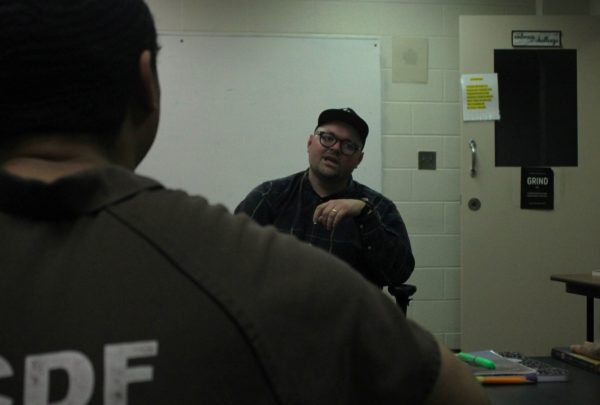
“We help get people a job out of prison but it’s not just about employment, it’s about the work mentally, spiritually and we prioritize that. Building community, building them up. This group, these students are brilliant when given a chance,” Mailman said.
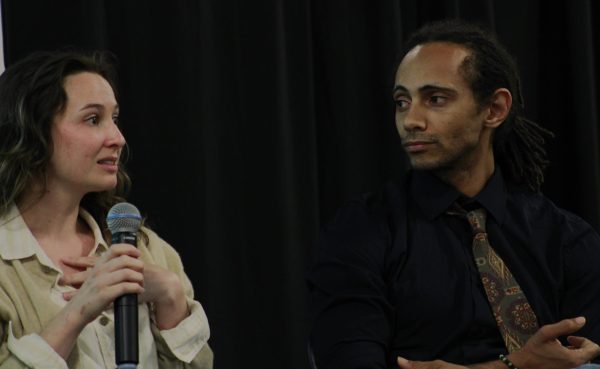
Johnson’s Professional Writing students, David Bahena Gutierrez, Garrett Davidson and Maggie Sprinkle developed and participated in the new workshops at BCDF. They recruited UNCA instructor Emily Shanahan to lead the inaugural reading circle studying Greek philosophers, Dorkheim and Marx. In a panel this month they spoke to the positive impact of experiential learning with detained students and the jitters of taking their studies into jail.
“The first week we went there we were a bit nervous, you could tell. By the second week we were bumping fists and adding onto each other’s thoughts and following up discussion. I just think it was all really incredible for everyone,” Gutierrez said.
“It gave me the opportunity to get back to the basics of education.The conversations we had were so interesting and I was thinking about them days later,” Sprinkles said.
“It brings education to the barebones and a refreshing break from the monotony of college. It was so incredibly new,” said Davidson.
“The capacity for growth is huge and you really do see that camaraderie build as people gain confidence and have productive conversations with each other,” Shanahan said.
All three desired for the PEP workshops to grow but expressed that the program is at risk. With the chipping away of the university’s core liberal arts program and threats of further budget cuts, PEP faces getting axed. Preventing that requires more student and faculty participation, as well as stronger support from UNCA administrators.
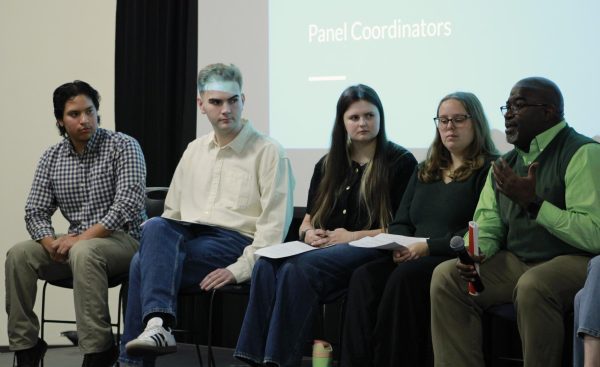
“One of my favorite things about this program is it’s very new. Something evolving and experimental. But involvement of students is crucial to this program,” Gutierrez said.
Politicians, university administrators and wardens like to have quantifiable metrics to show. Graduation numbers, job placements after release and drops in recidivism are good PR for administrations. April was officially recognized by Governor Stein as Second Chance month, but the majority of those imprisoned never had a first chance. A 2014 study by the Prison Policy Initiative found the median income of people pre-incarceration was only $19,185. Notably 41% less than those who never spent time in jail or prison. Median income post-incarceration shrinks, between $6,000 and $10,000 less. The U.S. criminalizes the very poverty that it creates. If the justice system and economic system fit hand in glove exacerbating inequality, then education should not simply be a path to employment. PEP’s holistic and novel intervention integrating students breaks down the ideological walls of the carceral system. It also exemplifies the original aim of UNCA to be a unique mountain institution focusing on quality education, student responsibility, and creative participation.
“Our growing track record and cultivating this relationship with the county helps the program clarify what our strengths are. What UNCA really can bring to prison education and people inside. Those who need and want it most,” Johnson said.
For Ellington, the most integral part of structured learning within prison is dignity.
“Let me tell you, when you stick a person in a hole and take away hope. When you prod and poke and tell them, ‘this is what you deserve, this is who you are.’ How do you expect them to turn into anything other than the worst of what you accuse them to be? The program was the exact opposite. There was the whole of humanity in it, in a place of nothing but darkness.”
Reading groups and workshops at Buncombe County Detention Facility are open to UNCA students.To get involved with the Prison Education Program email [email protected] and follow @prisoneducation_unca
