







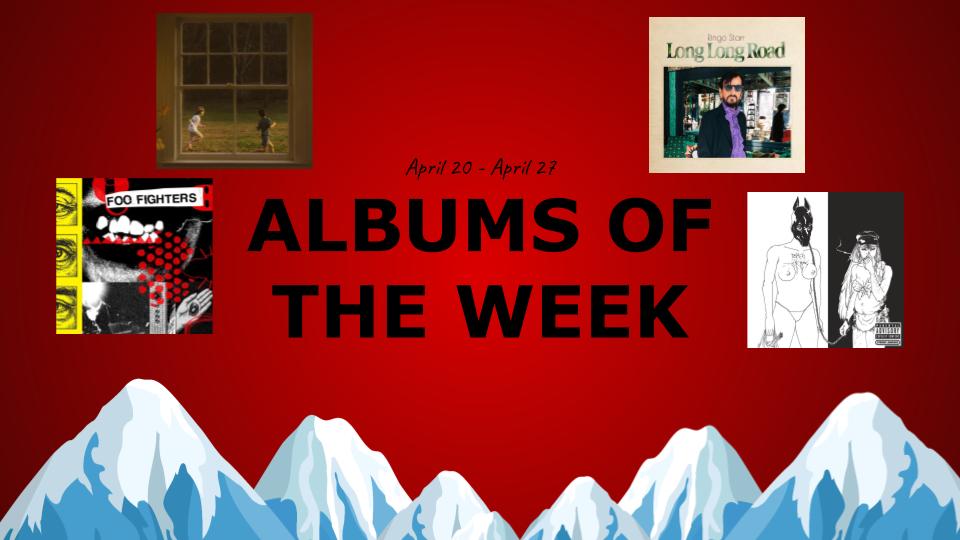





This week, I’ve got another four albums for your listening ears. There will be three new albums from the past week (on a monday to monday basis) and one classic album we’re celebrating the anniversary of.
Due to the abnormally high volume of high profile releases this week, not all albums that we care about can be featured here. However– if there’s a newly released album that YOU would like to review, please don’t hesitate to write one and submit it to us at the Blue Banner!
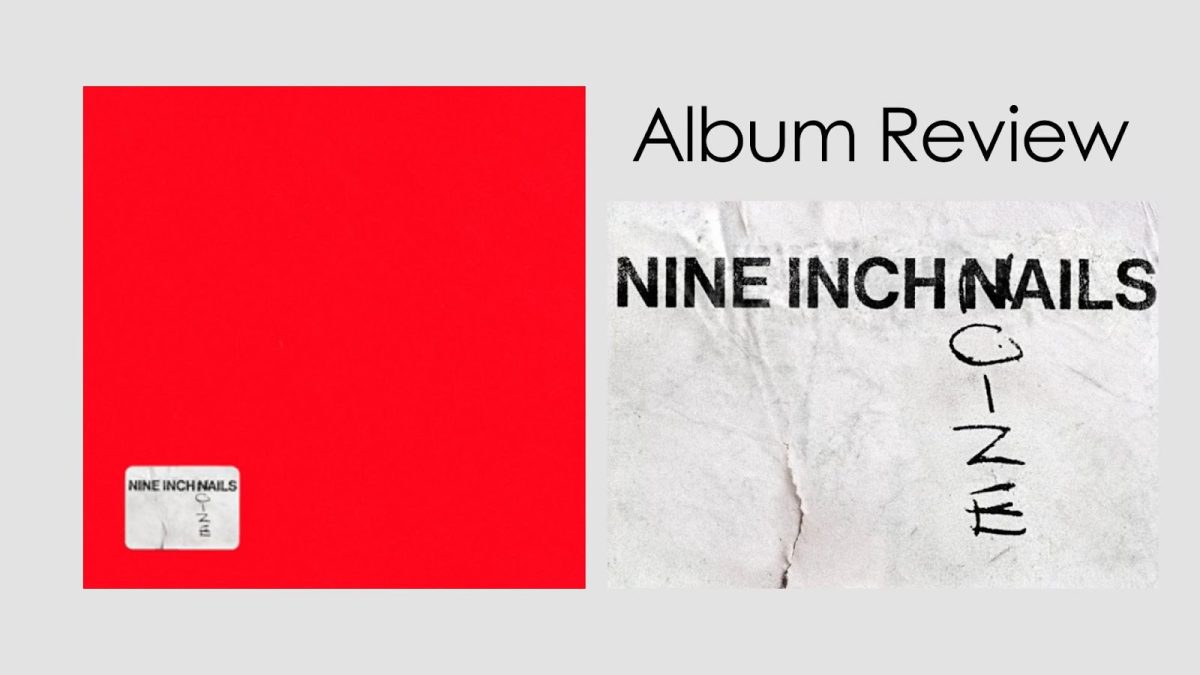
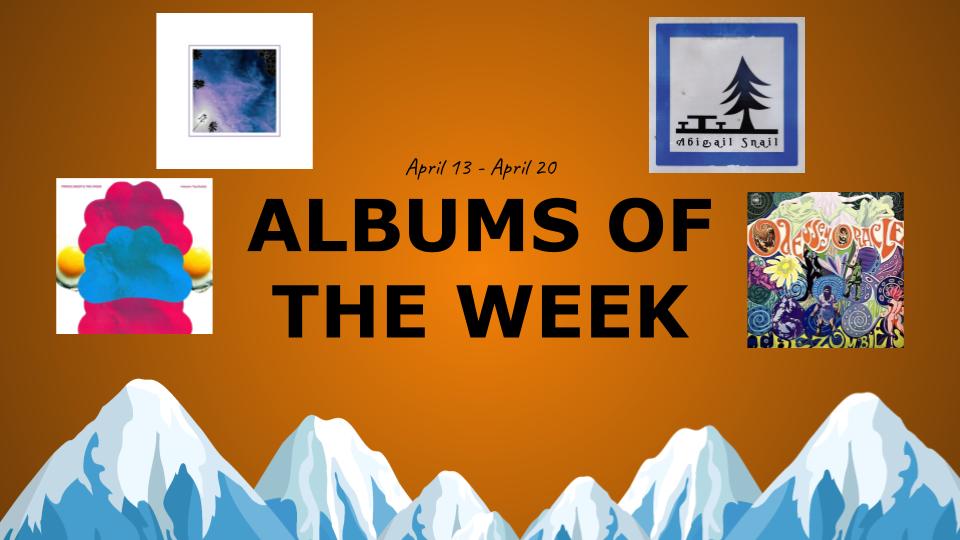
Snocaps – Snocaps
7.3/10
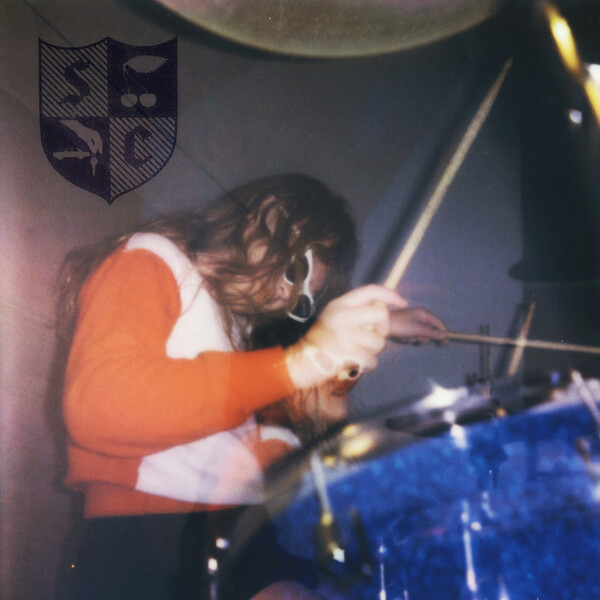
This spot was originally designated for the new Chat Pile release, but this album grabbed my attention far more on roster alone. Katie Crutchfield of Waxahatchee, her sister Allison of P.S. Elliot and MJ Lenderman of Wednesday team up for a surprise release under the name Snocaps with a self-titled project.
This album is the absolute distilled essence of the indie rock / alt-country vibe that Waxahatchee and Wednesday are best known for– but with slacker garage rock influence from Allison Crutchfield it takes on a slightly different tone, with a far more lofi production style than any of the members’ recent releases.
The album’s opener “Coast” tells you exactly what you’re getting into, simple drumming and a microphone that sounds like it’s coming from an amp in your friend’s garage. Many of the verse lyrics have that classic ramble-folk structure to them, with half-rhymes and syncopated lines. In “Heathcliff” you can hear the Crutchfields speed up some of their lines to catch up with the beats– not a criticism, it fits the style perfectly.
A lot of the lyrics are lacking however, in the above mentioned “Heathcliff”, the majority of the song is just the refrain “When you go down, you’ll take me down with you”. It fits of course and makes for a fun, danceable piece but it doesn’t have the lyrical creativity that I was hoping MJ Lenderman would bring to the project– neither do many of the songs.
The guitar tone usually remains clean– near acoustic, with a few exceptions, such as “Doom”, “Avalanche” and “Brand New City” where they turn up the gain and sometimes the energy. (This isn’t to say all the tracks bar those two are slow, country pieces– in fact a majority of them are on the more upbeat slacker-rock side, I’m drawing specific attention to the guitar tone here.)
I say sometimes here because while “Avalanche” and “Brand New City” are faster paced (and some of the highlight tracks), “Doom” slows things down despite the heavier guitar tone. (A pointless comparison, but the chord progression of “Brand New City” reminds me a lot of The Beatles’ “And Your Bird Can Sing”).
This album was a fun time and I can see myself coming back to it especially during the fall season (as it really hits those chilly mountain vibes) but it’s nothing absolutely incredible. However, it’s absolutely worth a listen if you like any of the very prolific members.
Everybody Scream – Florence + The Machine
6.7/10
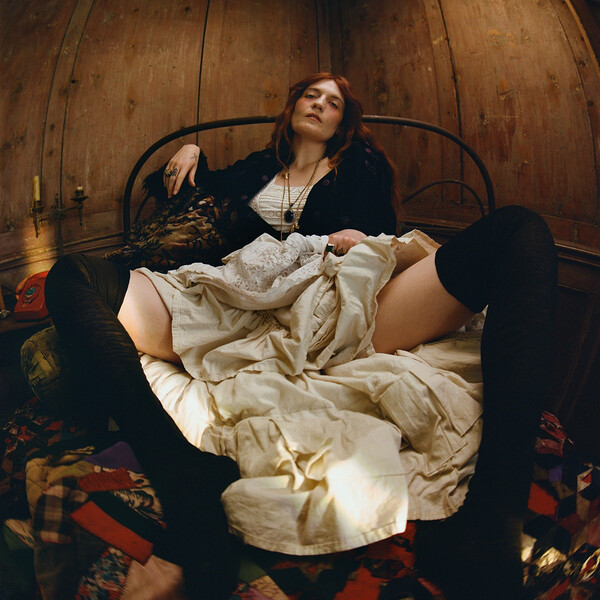
New from art-pop industry veterans Florence + The Machine is “Everybody Scream”, a dense, introspective and contemporary folk inspired art rock piece.
The music is exactly about what you’d expect from that description. A nice string section, pounding drums with unique percussion instruments, some reserved synth implementation and choral-esque backup vocals. The strings are all gorgeous, the guitar tones usually add to the atmosphere perfectly.
Lead vocalist Florence Welsh no doubt has an incredibly impressive voice with a gorgeous range– but at times, it’s just not for me– and can clash with the music. On tracks like “Perfume and Milk”, her voice goes over-the-top while the instrumental stays too calm and other tracks like “The Old Religion” have the opposite problem, where she waits too long to break out the operatic tone and ends up being too soft over a heavy string section.
A lot of the songs, such as “Perfume and Milk” or “And Love” spend the entire track seemingly building up to a climax at the end of the song that just does not pay off. The obvious counterargument here is that “it’s not building to a climax, it’s just a reserved song” to which my argument is that it still sounds bad and empty regardless of whether it’s supposed to or not. It’s clear there’s an attempt at making an artsy project, but the tracks aren’t long enough, nor do they get freaky enough for it to be worthwhile.
The worst offender of this in my opinion is the titular “Everybody Scream”, that is exactly the kind of commercialized, “stomp, clap, hey” music that just makes me cringe a bit. Her vocals are flatter here, the backing track is less inspired here– without the bridge and excellent vocal group-esque outro to break up the pace of the song, I’d have to call it unlistenable. At the very least it’s the very first track, so it only goes uphill from there.
Now, that was a lot of bad things and I want to make it very clear that this is not a bad album– there are tracks where they manage to nail both the chorus’ catchy hooks and the artsy build up to a final act. “Kraken” for example, is a phenomenal track, not only the best on the album but one of the best songs of the year. There’s other good songs too, “One of the Greats”, “Sympathy Magic” and “Witch Dance” are all great tracks (for the same reasons “Kraken” is)– as are there many moments throughout in the bad/mediocre songs (like the aforementioned bridge of “Everybody Scream”) that keep me going through some of the weaker parts.
It’s clear that the goal of this new record was to be a little more out there and less poppy than their previous works, but I suppose the devil on their shoulder telling them to keep things on the radio-friendly side won out and it held it back quite a bit. Still, it’s one of the band’s better projects and I would at least check out some of the highlight singles.
Iconoclasts – Anna von Hausswolff
8.4/10
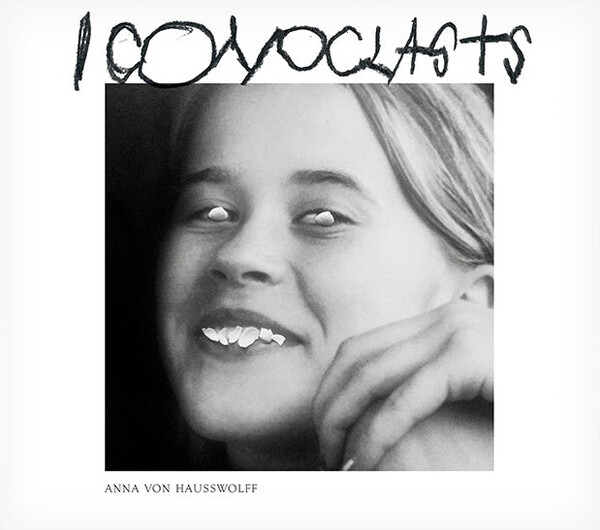
Before I go on to tell you that this is one of the best albums of 2025 and one of the best neoclassical darkwave albums of all time: I should probably explain what “Neoclassical Darkwave” exactly means. It’s a sort of blend of dark-ambient, darkwave and modern classical music to create a baroque gothic vibe. Bar Ligua Ignota’s masterpiece “Sinner Get Ready”, von Hauswolff has the best neoclassical darkwave record up to this point, with her 2018 album “Dead Magic”.
Where was I? Oh yes– this is one the best albums of 2025 and one of the best neoclassical darkwave albums of all time. Lush is the keyword here– the entire thing has this deep-set, cold atmosphere to it. It’s like the eye of a hurricane almost, you’re surrounded by cold, swirling, ever-present power at all sides but you yourself manage to stay unaffected despite watching the chaos unfold around you.
The instrumentation is no doubt the standout feature, the influences the neoclassical darkwave draws don’t have much overlap with many other contemporary genres, which gives the entire record a wonderful, unique feeling. Various woodwinds such as saxophone and clarinet cascade along full orchestral string arrangements. Though the music is mostly dominated by the baroque instruments, there’s a gentle implementation of more modern sounds that emphasize the “neo” in neoclassical.
Gorgeous synth work and industrial-inspired drumming on “Stardust”, but it’s still used sparingly, these features are used to prop up the acoustic instruments– in the case of “Stardust” it’s the absolutely phenomenal saxophone. In-fact, that very saxophone is the instrumental highlight of the album. It aggressively yet gracefully flutters along the path set by the other instruments– tracks like the aforementioned “Stardust” and “Consensual Neglect” have gorgeous sax solos all throughout.
From the way I’ve described things so far, you might think that this album is instrumental, but the opposite is true. Anna von Hausswolf’s vocals are absolutely gorgeous. Grand, operatic and ever hypnotic. Her voice is incredibly impressive on technicality alone, she’s able to bob and weave between octaves and maintain high ranges for extended notes– she sounds like a wailing ghost in the best way possible at times. She’s almost always going all-in too, while there are rarer occasions such as “An Ocean of Time” where she’s quieter. The excellent production means that her giving it her all in every song all of the time is more of a treat than it sounds.
Quick aside but interestingly this is the second mainstream resurgence of 70s rockstar Iggy Pop this year– after “Punkrocker” dominated theaters and everyone’s minds after James Gunn’s “Superman”, he makes a wonderful surprise appearance on this album. His voice has aged phenomenally– there’s an almost wooden quality to his voice. The timbre is dark, resonant and gritty, yet smooth all around. The track he appears on “The Whole Woman” is one of the highlights of the album due to his incredible performance.
It’s not just Iggy Pop who makes a surprise appearance– Ethel Cain shows up too, the slowcore influence from her works perfectly in tandem with von Hausswolff’s dark vision. Anna von Hausswolff’s sister, Maria also lends a hand in the penultimate track “Unconditional Love” and their voices are wonderful together.
As the nights get chillier, the sun sets quicker and everyone prepares themselves for the desolate wintertime, it’s not always a warm, cozy record that you’ll want by your side. In this case, it’s an equally dark masterpiece to accent the cold breezes. Do yourself a favor and enjoy one of the best albums of 2025.
The Inner Mounting Flame – The Mahavishnu Orchestra with John McLaughlin
8.9/10
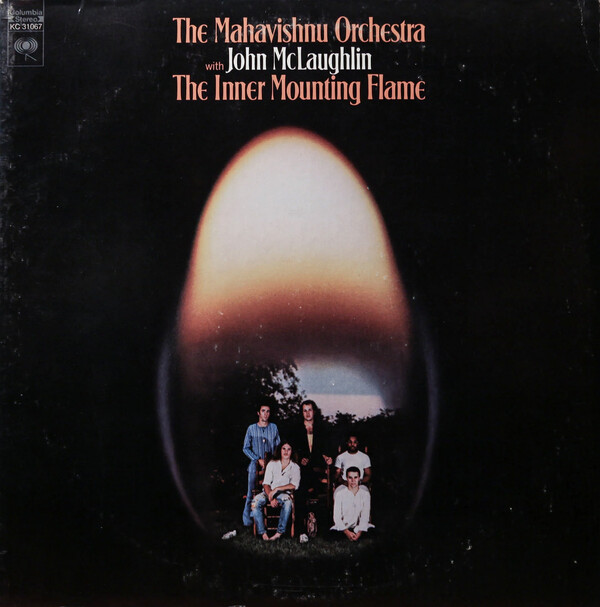
In the late ‘60s and early ‘70s, jazz was undergoing a second renaissance. Artists began experimenting with electronic instruments and the fusion of rock music, growing mostly out of the psychedelic rock scene (The Doors’ debut record for one could be considered jazz rock before jazz rock– after all if jazz grew out of blues, why shouldn’t jazz rock grow out of blues rock too?) and was first pioneered by Frank Zappa and the Mothers of Invention.
This record however, comes after Zappa’s initial records and after Miles Davis put guitarist and composer John McLaughlin on the board by featuring him on his landmark “In A Silent Way” and even bigger follow up “Bitches Brew”. The sound is now far more refined, listening to this record you’d never expect the genre was invented just a few years prior.
At the forefront of this album is John McLaughlin. The kind of insanely fast, syncopated, tapping solos that are scattered all throughout all kinds of genres began here. The inspiration is clearly from the stuff that proto-metal bands like Deep Purple and Black Sabbath were doing at the time, but it was this record where that kind of work began to take hold of something recognizable.
Speed is the key on this album. Take “Awakening” for example. The track opens with extremely fast coordinated guitar and drum riffs, before the violin comes in for a layer of intensity– then it’s off to the races as McLaughlin wastes no more time before he starts to intensely solo. The only thing interrupting his stream of flashy licks is the equally intense drum breaks to help the pacing along.
This trend continues throughout all the other tracks, from the moment the album kicks off with “Meeting of the Spirits” you can tell you’re in for a ride. It’s not long after that when the best track “The Noonward Race” sucker punches and drags you along for a ride on its rock-esque groove. That’s what’s so incredible about this album to me– it manages to stay jazzy while still leaning more towards the rock side of things. It makes this record a great entry point for those looking to get into fusion-jazz, or jazz at all.
You’re basically signing up to listen to 45 minutes of electric guitar solos, mixed with some of the best jazz violin, gorgeous basslines and phenomenal drumming.