




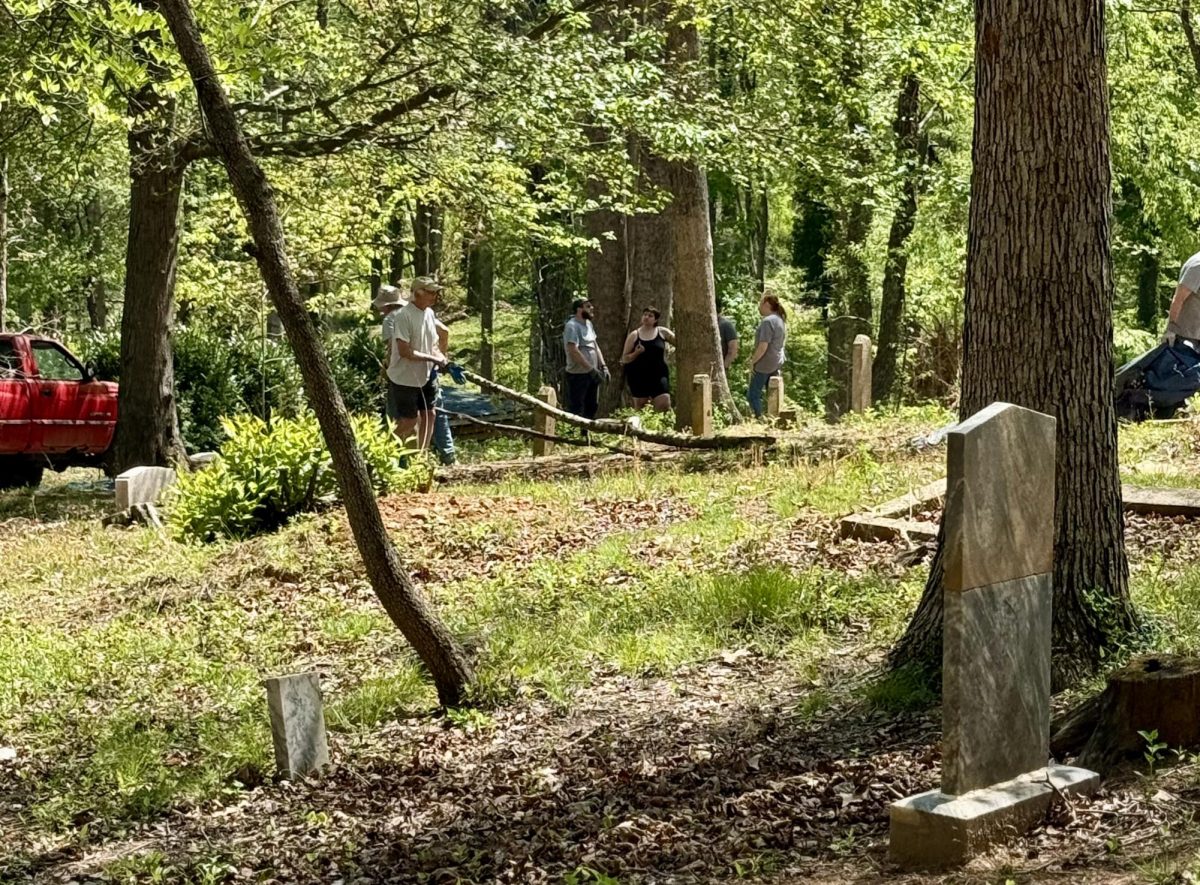











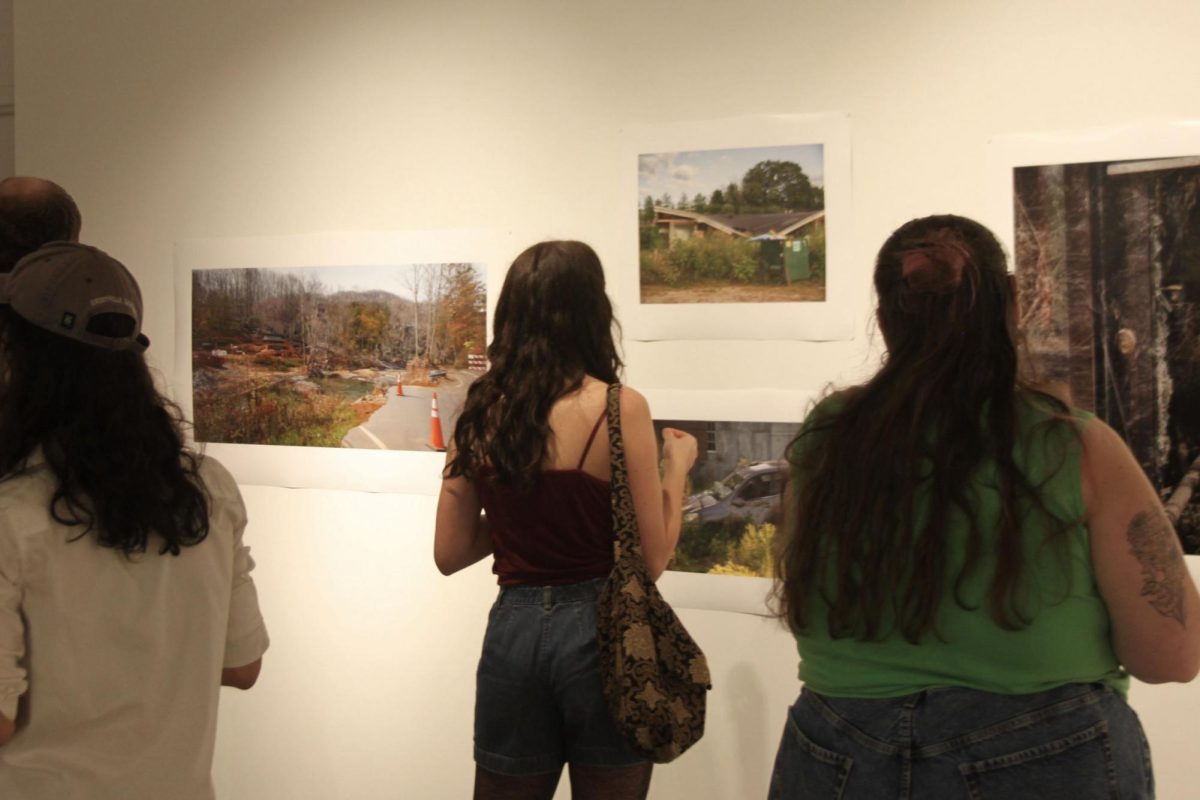
“For the past year and a half, I have photographed different places in and around Asheville and Western North Carolina, looking at the long term ecological impacts of climate change and Hurricane Helene,” said Natalie Akins, a BFA student at UNC Asheville and the featured artist for her senior capstone solo show.
Akins said the message she hopes is received by viewers of the show is that the intensity of storms like hurricane helene are only going to keep increasing with climate change. The show features photos showing the damage that was caused from helene on Asheville and other parts of Western North Carolina.
“This body of work examines the increasing severity of climate-driven events on ecosystems and communities. As global temperatures rise due to human activity, storms and natural disasters are becoming more frequent and severe. Using photography and informed by environmental science research, this project explores themes of regrowth and resilience in Southern Appalachia following Hurricane Helene, an unprecedented storm intensified by a warming climate. By layering photographs taken at different stages of recovery, the work seeks to visualize the lived reality of climate change and the long-term ecological and social consequences. It aims not only to document transformation but also to emphasize the urgent need for meaningful climate reform,” Akins wrote about her solo show, and the description was shown on a wall in the center of the exhibition.
“I’ve worked on it for a long time. Really, all of college has been spent preparing for BFA, but especially the past three semesters. It’s a step towards what I want to do, I’m looking at grad schools currently,” Akins said. “I’ve gotten to learn a lot.”

“I think this shows a level of professionalism, this is quite a well put together exhibition,” Eric Tomberlin, associate professor of art and Akins’ advisor, said. “I think it’s important for all of us to come to a place like this to see this work or any of the student shows.”
Tomberlin said each BFA student solo exhibition takes on a different subject matter and gives viewers new questions to think about each time. He said it’s something he thinks people should take time to see and appreciate.
“This one is really focused on thinking about Helene and climate change,” Tomberlin said. “But another exhibition could be thinking more about another topic, like race or gender.”
Tomberlin said coming to a solo exhibition from an emerging artist offers a unique point of view than what is seen at a higher level and age, such as art seen from a museum.
“I think young artists have the potential to be tapped into what’s going on better,” Tomberlin said.
“Young people coming up are a little bit more tuned in. A big career artist is probably not quite tuned in the same way.”
Tomberlin also thinks attending events like this is a good chance to interact with the art community at the university. It’s a good chance to support an artist and listen to the conversation.
“This is a very timely and personal type of work that captures something that we’ve all been experiencing,” Laurel Taylor, assistant professor of art history, said.
Taylor said that the exhibition gives a local view of the impacts of Helene on western North Carolina. She said this is the difference between seeing a student’s BFA exhibition that experienced something that the viewers of the exhibition likely experienced as well, versus a typical museum experience that is not as personal.
“Having something on this scale is pretty important,” Taylor said. “This is a very timely and personal type of work that captures something that we’ve all been experiencing.”