




















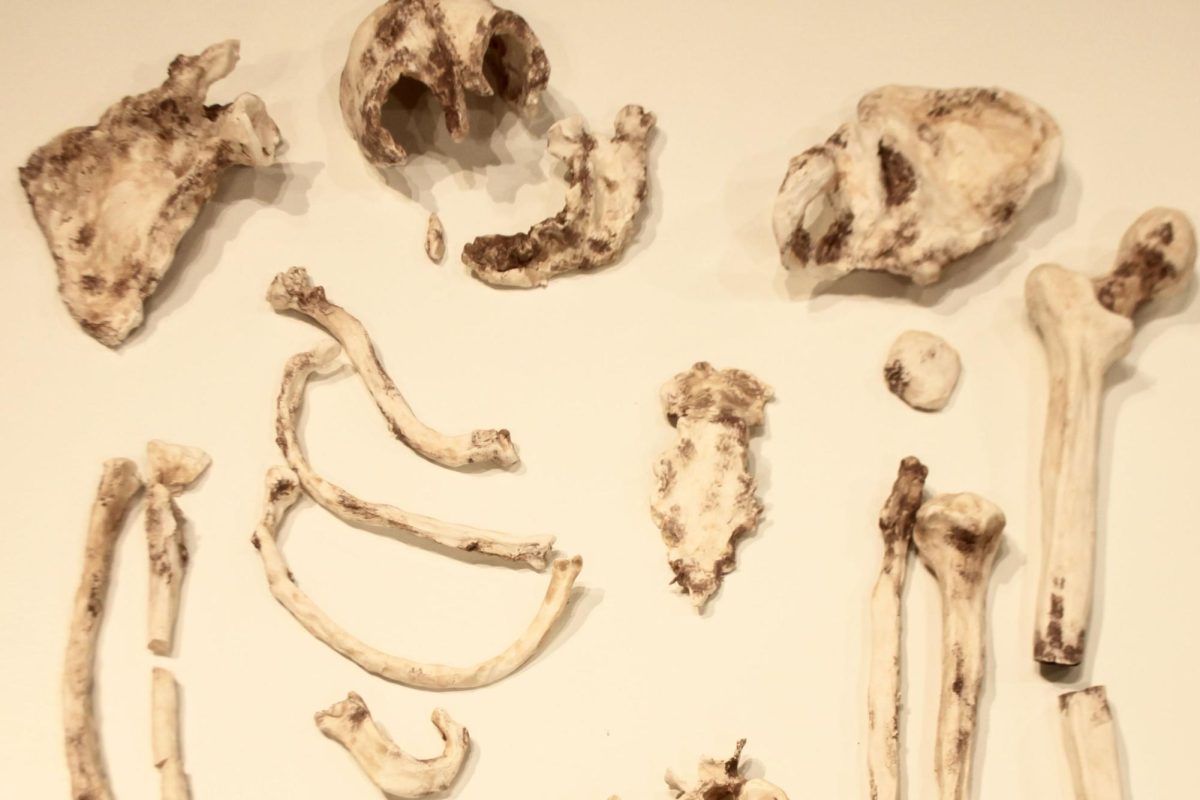
The BFA show last Thursday contained two different shows instead of the typical solo show. Both shows had contrast but definitely stood out on their own turf. One show was intricate ceramic sculptures of parts of the human body. There were bones, ears, eyes, arms, kind of like a crime scene on pedestals. These sculptures were by Eli Landis, and they were someone I wanted to hear from.
“My work is centered around the human body, and the grotesqueness of what makes up a human body, but also all of the beauty that comes with that,” Landis said.
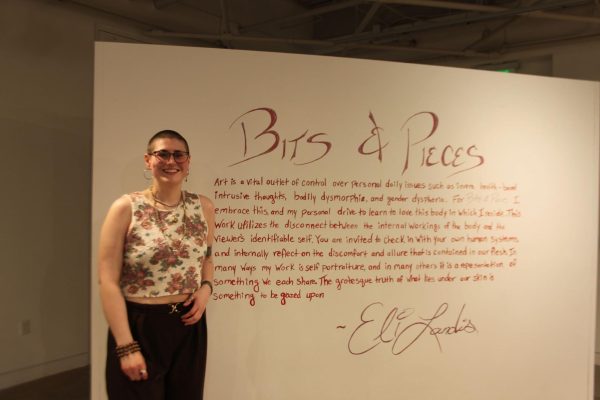
“Art is a vital outlet of control over personal daily issues such as severe health-based intrusive thoughts, bodily dysmorphia, and gender dysphoria. For Bits & Pieces, I embrace this, and my personal drive to learn to love this body in which I reside. This work utilizes the disconnect between the internal workings of the body and the viewer’s identifiable self. You are invited to check in with your own human systems and internally reflect on the discomfort and allure that is contained in our flesh In many ways my work is self portraiture, and in many others it is a representation of something we each share The grotesque truth of what lies under our skin is something to be gazed upon,” was the statement given for Landis’ exhibition.
“A lot of the origin points from my art are like intrusive thoughts about my own health and my own body,” Landis said. “Sometimes I feel something weird going on in me and I start panicking.”
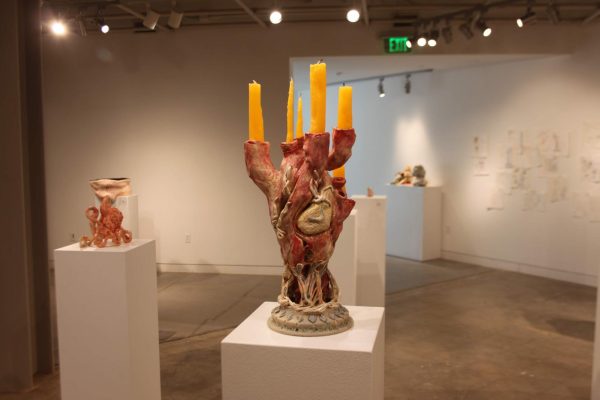
Landis said the human body broken down like this is seen as grotesque and ugly, but their art shows it in a context that turns the gross into art, giving it beauty.
“I started thinking about ways that I could beautify those parts of the body and the human experience of things being wrong with us,” Landis said. “You know, people do get kidney stones and infections and nasty things, and it’s part of being a person and having a body.”
Landis said that the journey to get to the point of a personal exhibition is nothing short of challenging; the hardest part is filling up a space as big as a gallery.
“You have three semesters to hit an entire school of art,” Landis said. “It’s very much down to the students to figure everything out. You don’t get a lot of assistance.”
Landis said it’s important to keep yourself driven, always producing and never stopping. It’s important to make sure you have enough and everything together to fill the gallery space at the end of the journey.
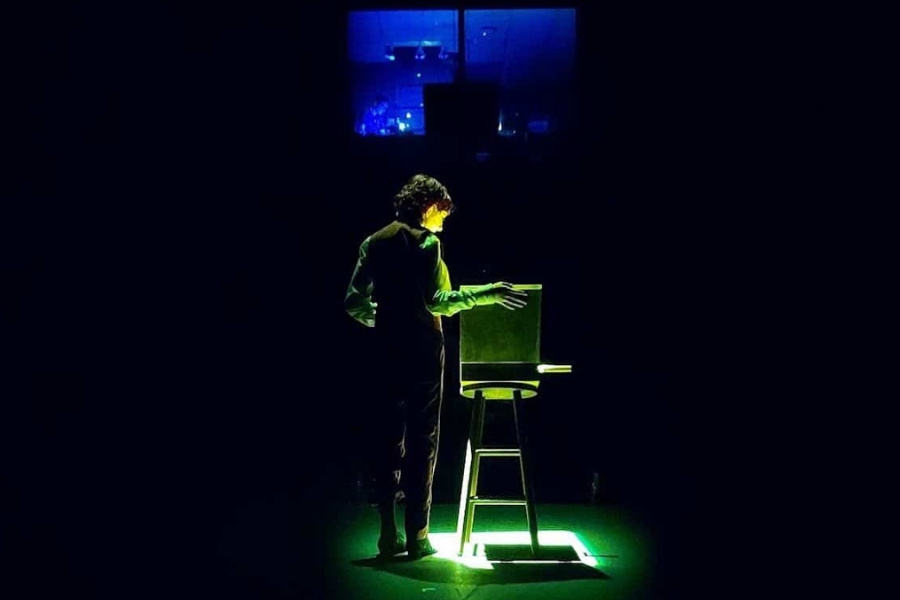
The other half of the show contrasted the body parts with color. The paintings were colorful, yet dark.
“It’s kind of like my expressionistic interpretation of my own experiences of nightlife,” Helena Briest said, a BFA painter and the other part of this exhibition.
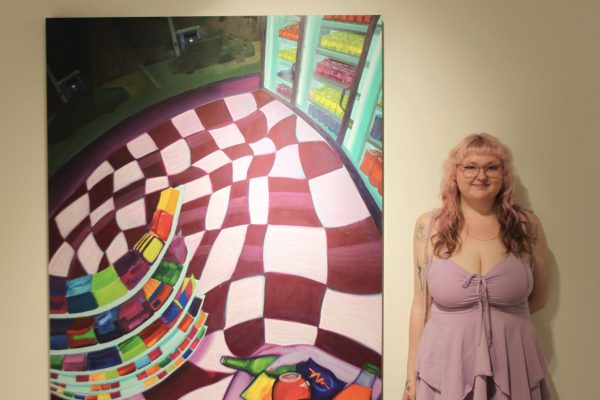
“Most of them are based around the particular socialization that happens at nighttime. I think it somehow gives us permission to interact with each other in a totally different way,” Briest said. “People are so much more open with each other. And the connections that happen are just totally different.”
Briest said that nightlife gives a break from the unconventional modern societal setting we’re currently in. Something that stood out to me was a painting of a bathroom with the words “Graffiti me” with an arrow. Briest was encouraging people to add their own art on top of the painting, which is something totally unique at a show like this.
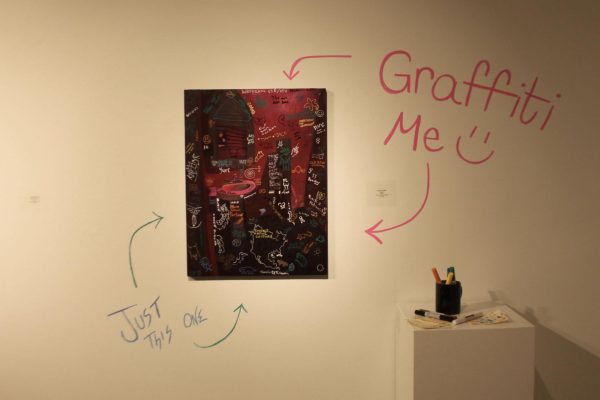
“The bathroom series is about the anonymity of what happens in bar bathrooms.
I think it’s really interesting how people interact with each other,” Briest said. “I didn’t direct it, but it even has happened on the piece that I’ve had people sign. I see people talking to each other on it.”
Briest said that she thinks nightlife is a place where people let their guards down and be themselves. It’s a place where people get to meet each other without fear of judgment. She thinks people are more open-minded in the context of nightlife, less insecure and it’s something that should be embraced instead of shamed.
“It’s one of those things where I don’t think you see the end until you’re at it. to try to create a cohesive body of work starting with nothing is terrifying, and you don’t really know what you’re doing the whole time,” Briest said. “You just keep going and eventually it all starts to come together.”