












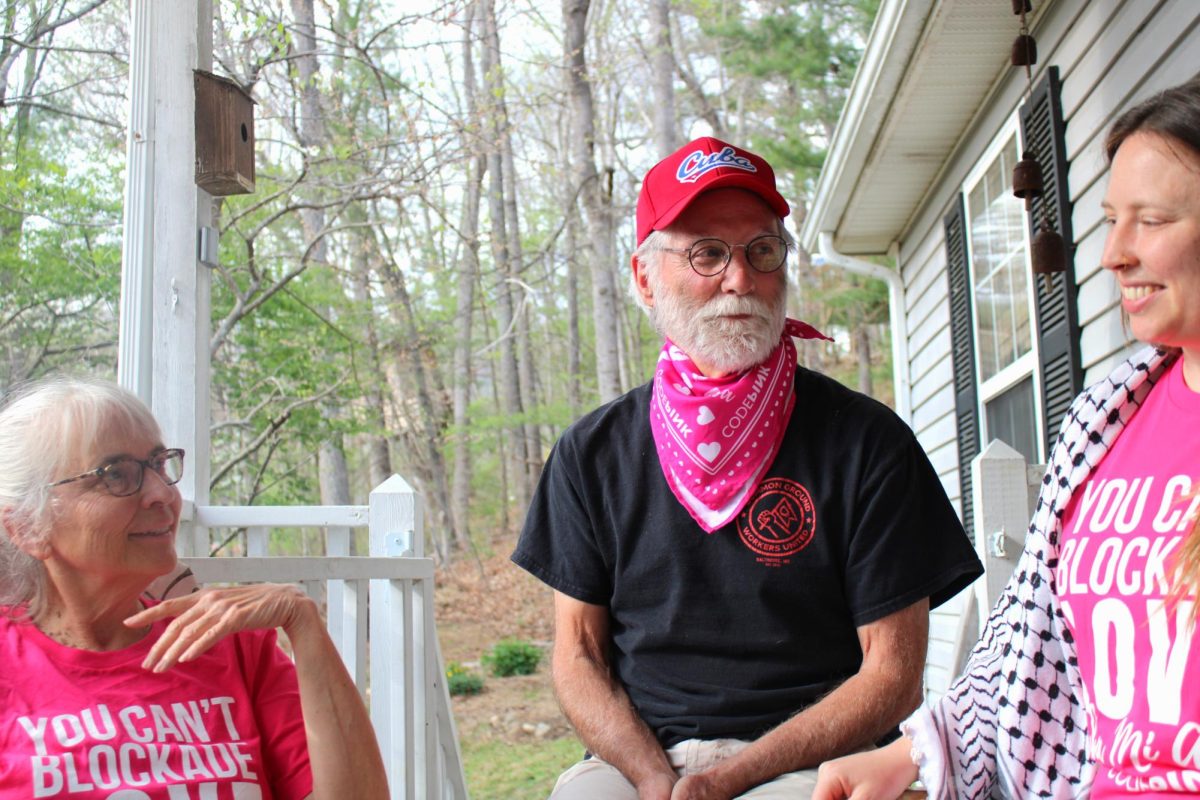
Local activists traveled with Nuestra Americas Convoy bringing over 6,300 pounds of humanitarian aid to Cuba amidst the Trump administration’s oil blockade.
Since Fidel Castro declared Cuba a socialist nation on April 16, 1961, the U.S. has imposed crippling sanctions on the tiny island. For over 60 years, Cubans have adapted and made great strides, all while being cut off from a major trading partner that lies only 90 miles north.
On Jan. 31 – only weeks after the illegal kidnapping of Venezuela’s President Nicolas Maduro — President Trump announced a complete blockade on all oil from entering the country. The lack of fuel has led to starvation and country-wide, 24-hour blackouts. The U.N. has called the executive order a “grave threat to a democratic and equitable international order.”
But people across the U.S., including here in Asheville, are organizing in support of Cuba and against the blockade. On March 17, local activists Ken Jones, Melody Shank and Nicole Lopez – along with over 170 others from around the world – landed in Havana to deliver food and pediatric medical supplies to the Cuban people. They were part of the women-led, anti-imperialist CODEPINK contingent of the Nuestra Americas Convoy. CODEPINK is a feminist grassroots organization working to end U.S. warfare and imperialism.
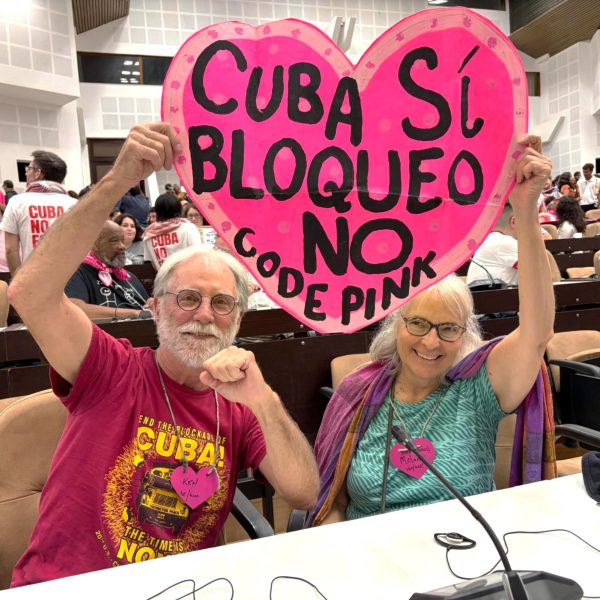
“We’ve been silently starving Cubans while we’re loudly genociding Palestinians in Gaza,” said Lopez.
Lopez works in reproductive healthcare. She traces her Cuban roots to her great grandfather — su abuelo — who emigrated to Tampa in the early 1900s, where he worked as a cigar roller. Growing up in Swannonoa far from her Cuban family, Lopez reconnected with her heritage by studying salsa. Salsa music is the unique sound of the Latin American diaspora. A fusion of Cuban dance and Puerto Rican rhythms forged in the 60’s by Latin American immigrants in New York City.
Even before oil shipments were completely cut off, daily life for Cubans was one of struggle and resilience. Lopez saw firsthand the constrained conditions created by decades of US sanctions. When she took part in a cultural exchange last year when she went to a performance at the world-famous Club 1830 in Havana, a seemingly small inconvenience can quickly snowball.
“One piece of the A/C broke, and because that one piece is manufactured with 10% U.S. materials, they weren’t able to replace it. The organizers had to pivot. Things on the ground are constantly changing like that because of our government’s sanctions,” Lopez said.
Melody Shank, a retired professor of teacher education, was instilled from a young age with a sense of duty against injustice. She grew up in a progressive church and was raised by a pacifist family that spoke out against the Vietnam War. This was her first time in Cuba and the ideas Americans hold about the socialist country were immediately shattered.
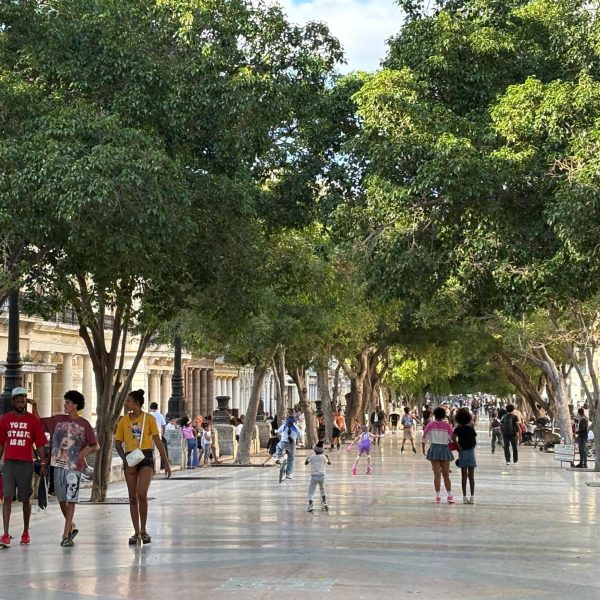
“There are no homeless people in Cuba, no one sleeping on the streets,” Shank said.
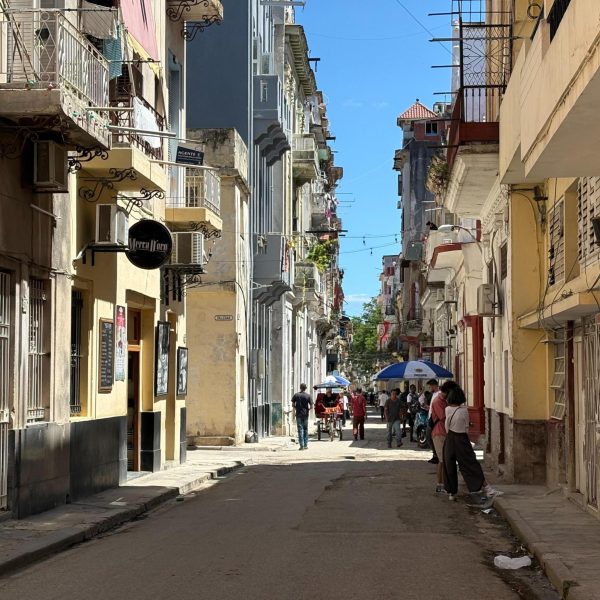
Cuba’s constitution makes housing a right for all people. One government project focuses on restoring historic buildings in Old Havana. All of the iconic centuries-old Spanish colonial buildings are state-owned. There are museums and free cultural institutes on the ground floors, accessible to all Cubans. The upper floors are converted into free housing for seniors, childcare and people who might otherwise be living on the street.
“They are creating these sort of microcosms of social care, seniors who look after children of mothers who go to work, or are expecting. People who look after elders. These wraparound services for healthcare – all in one place and all throughout the city – a sense of building a culture through the project,” Shank said.
These enclaves of well-being, however much they can provide in service to the Cuban population, are still limited by the economic conditions on the island. This is not due to any fault of the socialist system but from the stunting effect of sanctions and the oil embargo.
“The Cubans are really suffering now, on top of the decades of sanctions, but without any oil, no gas, the stuff we take for granted that keeps society running,” said Shank.
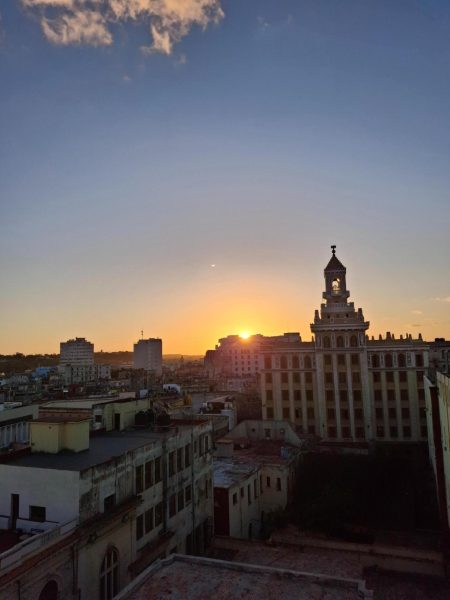
Ken Jones, co-founder of the local anti-war group Reject Raytheon, had been to Cuba twice before, in 2007 and 2017. While he saw the effects of US sanctions on the country, people were happy and had vitality.
“On those trips, people came up to you wanting to dance. I used to say I danced my way through Cuba. You go to block parties, they bring out cake. They didn’t have much, but they shared what they had. There was joy, energy,” Jones said.
This trip was markedly different. He was shocked by the conditions in the island nation of 11 million. Havana’s main boulevards were bare of traffic, trash rotted in piles and passersby wore long, solemn faces. Those who came up to him to talk were shrunken from hunger and asking for help. That’s why they were there, though.
“I was honored to be on this trip, to bring aid, to hand out what I could and what we were told over and over again was most important, to be in real solidarity with the people who live under the gun of the US,” Jones said.
With fuel shortages, walking the wide malecons and narrow streets was the only way around. Jones and Shank met plenty of people, but one couple they met stood out. The young parents cradled their infant child – no more than two weeks old. They were charming and proud of their baby, showing him off. The four had a long conversation about Cuba-American relations and shared stories of their families, but the parents never asked for a thing.
“We’re getting ready to part, and I just went, ‘I gotta give you money, for your baby, here spend this on your baby.’ But in light of the circumstances, it struck me that they just wanted to connect,” said Jones.
During the trip, they were able to explore Havana and converse with working-class Cubans. All three heard a wide-range of views about socialism, Castro and the government. One thing they didn’t see was much of any police presence.
“I think we saw one policeman the whole time we were there, and he was just chatting up people; he wasn’t acting like a cop. There’s a boogeyman image of Cuba and it’s just not there,” said Jones.
The common perception of Cuba peddled by U.S. media is that it is an authoritarian communist regime that maintains power through a police state. Citizens are silenced, imprisoned for speaking out and cops roam the streets using violence to suppress dissent. Cuba does have prisons, and people have been detained for inciting violence. All three remarked though, that people they met were quick to tell you exactly what their political views were. Many spoke in support of the communist leadership, and some readily voiced criticism of the government without fear.
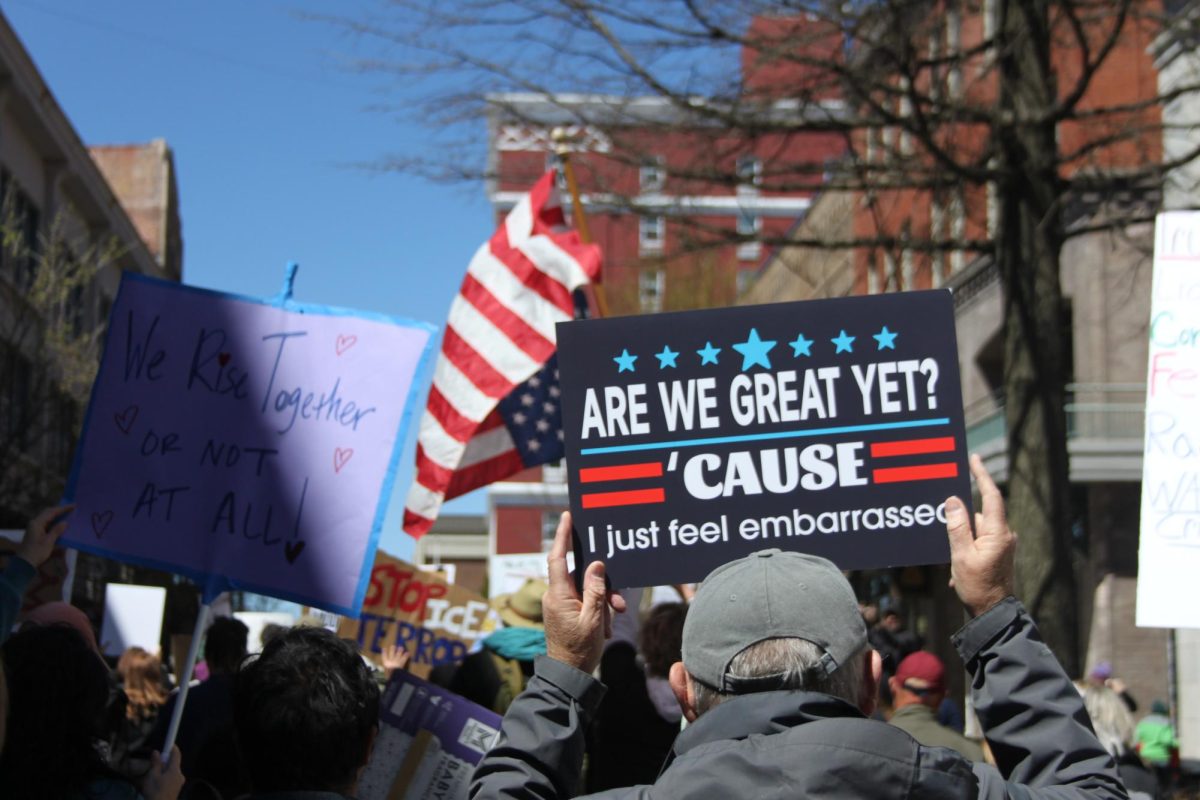
As the Trump administration dispatches federal agents into neighborhoods, kidnapping and killing Americans in broad daylight, the casting of Cuba as a despotic communist regime rings hollow.
“I’m not particularly religious but I’m gonna quote the Bible, ‘remove the log out of your own eye before trying to take the splinter out of someone else’s,’ the audacity of the U.S. imposing these sanctions and then to say ‘we’re gonna liberate you,’ it’s a joke,” said Lopez.
Back home in Asheville, Jones, Shank and Lopez are deeply rooted in the anti-war movement. The group Jones co-founded, Reject Raytheon, developed out of an effort to block the construction of a Pratt and Whitney aerospace manufacturing facility in Buncombe County. Pratt and Whitney is owned by Raytheon Technologies, one of the largest weapons manufacturers in the world. The factory at Biltmore Farm is located directly across from the NC Arboretum, on the banks of the French Broad River. Jones sees an innate connection to his organizing work and the conditions in Cuba.
“The war profiteers making a killing off our [U.S.] many wars belong to the same capitalist cabal that includes the oil and gas industry and investment firms. The point of strangling Cuba with this blockade is to get rid of any system that refuses to submit to the world order that funnels global wealth to the capitalists, ” said Jones.
Ultimately, the Cuban people are suffering under US imperialism. The blockade has put the country under siege, halting development and threatening the lives of millions. While Cuba exports doctors to countries around the world, the US exports bombs and bullets. The three activists see solidarity as the top priority for Americans who want to help Cubans. Join an organization, talk to your friends and coworkers, hold a fundraiser and travel to Cuba to see for yourself.
“What they really want is just to be friends, to connect to us. The sort of love and warmth you convey by being there means a lot to people. Solidarity is real,” said Jones.
The three will be hosting a report on their trip to Cuba on April 18 3 p.m. to 5 p.m. at 122 College St.