













Growing up, I was told many stories about my grandfather’s life in Iran. I don’t know if they were true, but I like to think that they are, as they keep his memory alive.
The one that I always remember is the one where he stole an airplane with his friends so that he could come to the United States.
***
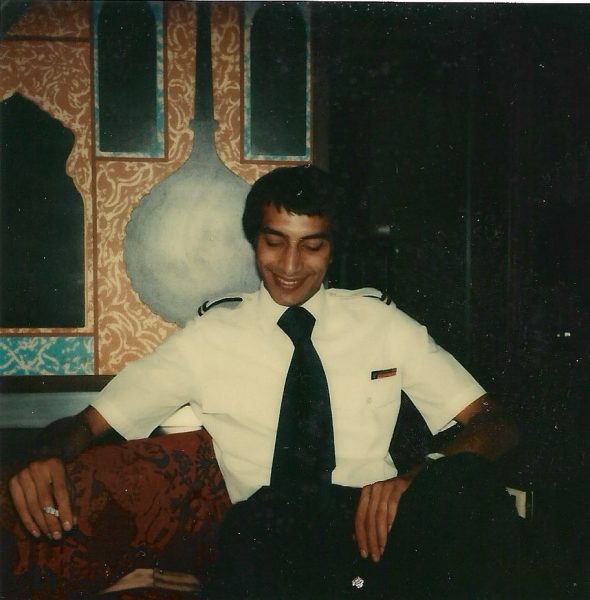
He was an Iran Air employee, a man accustomed to the rhythms of airports. The hum of engines, the clipped radio chatter, the choreography of departures and arrivals. Life moved slower in those days, but decisions did not. When the call came in, his father and he left immediately for Mahamad Airport, slipping into the familiar world of the tarmac as if they were reporting for another shift.
There was no panic, no whisper plotting. Just a quiet, shared understanding among five men who had spent their careers in aviation. They blended in with the ground crew, their uniforms and badges granting them the invisibility of routine. They waited for the others to arrive, each step unfolding with the calm precision of people who knew exactly how airports worked and how to move through them unnoticed.
The plan, if it could even be called that, was simple. They approached an Iran Air aircraft and told the ground crew that they needed to run some tests. No one questioned them. Why would they? They were Iran Air employees, familiar faces in a place where familiarity was its own credential.
They boarded and closed the door. They then proceeded to power up the engines.
Then everything changed.
One of the friends, who was a captain, guided the aircraft onto the taxiway. The ground crew watched, confused but not alarmed, until the engines roared and the wheels lifted off. By the time anyone realised what was happening, the plane was already climbing into the air.
At first, the group aimed for New York. LaGuardia Airport was the imagined endpoint, a place where they believed they could land, step out and begin again. But Iran Air had already reported the aircraft as stolen. The news spread across international channels. As the plane approached the U.S. airspace, the radio calls were growing sharper, more urgent.
“Iran Air flight, state your intentions. Is this a hijacking?” The question repeated, again and again. It filled the cockpit with a new kind of pressure, not from the revolution they had fled, but from the uncertainty ahead.
The weight of it all had settled in. The reality of what they were doing and what might be awaiting them became impossible to ignore. In that suspended moment, they made a decision that would alter the course of everything. They were diverting to London.
The landing at Heathrow was uneventful, almost anticlimactic. They taxied in, shut down the engines and left the keys inside the aircraft. There were no dramatic standoffs, no arrests on the tarmac. They simply walked away from the aircraft that they had taken across continents.
What happened next is murky, but one thing is clear. They contacted Iran Air and told them exactly where the plane was.
“It’s in London,” they said. “You can come pick it up.”
With that, the chapter was closed as quietly as it began.
My grandfather booked a commercial flight from London to New York. This time, he boarded as a passenger, not a flight attendant. When he stepped onto American soil at LaGuardia, which was his original destination, he claimed asylum not too long after.
***
The Revolution was an event that changed the trajectory of Iran. My grandfather grew up in an Iran that had a Shah as its leader, and watched it all fall down in the matter of a year.
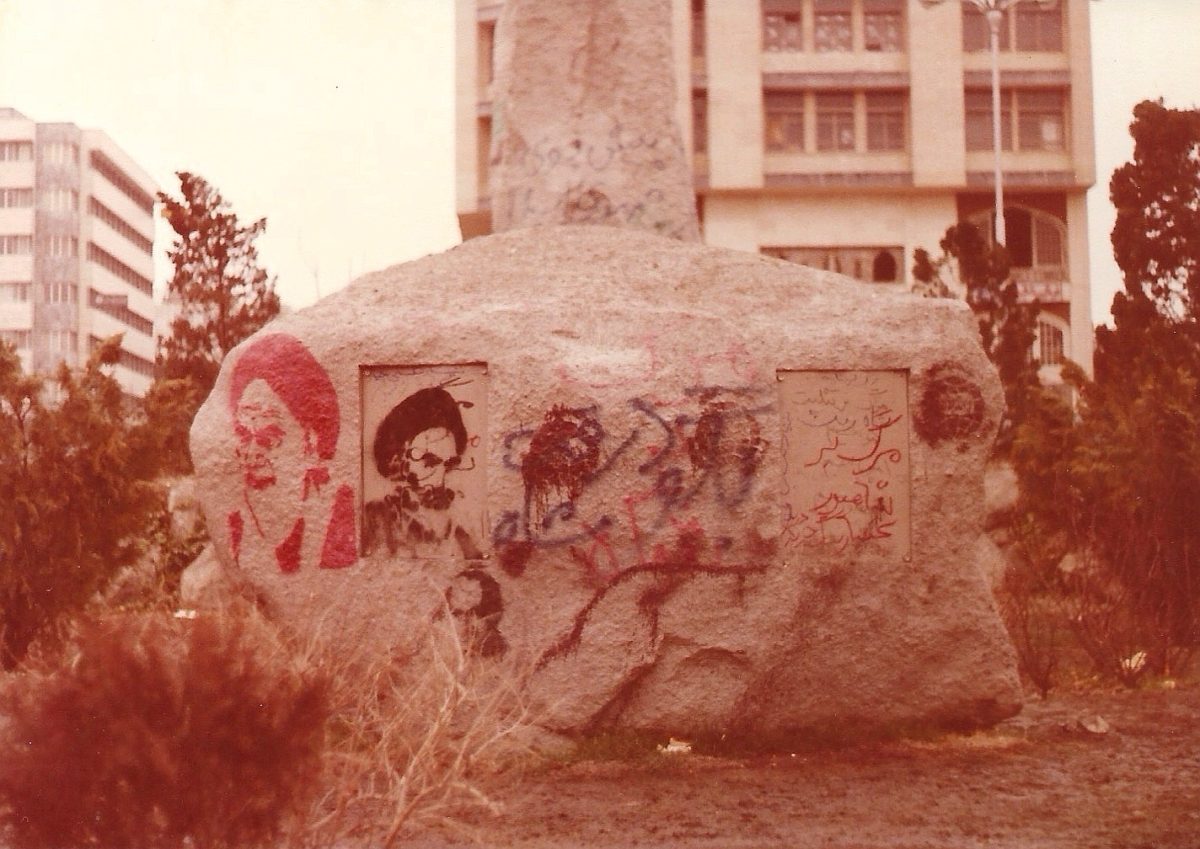
In the years after he had left, he would visit and would sometimes bring my grandmother with him. One time, they had people graffiti the house they were staying in because of my grandmother being American.
“When your grandmother and I would travel to see my sisters, there would always be some form of graffiti,” my grandfather said. “On the walls of the house and on the cars, they would write messages of harm against her.”
“Death to America,”“Go back to your country,” and many more would be written in Farsi by people. Many of these sentiments were written on the American Embassy in Iran as well, and are still there now.
On March 18th, 2023, my grandfather passed away, and with him his stories of Iran.
***
Now, Iran feels so far away. The names I grew up hearing, my mother’s family and my father’s family, have now become people I can’t reach.
Now, Iran is in chaos. Bombings, closed borders and silence where voices should be. My grandmother Zarah managed to reach my grandfather Iraj, who is back in Iran, trying to stay safe. Meanwhile, my mother has been trying to reach out to her father’s sisters for days with no answer.
It’s in moments like this when the mind fills with fear, you’ll start to imagine the worst long before you have any reason to.
My grandfather was supposed to return to the United States for a month-long visit next week on the 10th. He had called the airport to confirm that his flight was still scheduled, only to be told that Iran’s airspace had been shut down. No planes in, no planes out. If he wanted to leave, he would have to take a bus to Turkey. By the next day, that option had disappeared too. No buses. No flights. No movement at all.
The stillness makes me think back to my last trip to Iran, a trip I didn’t know I would hold onto so tightly. In July 2023, I was able to go back to Iran and visit my family for the first time in six years. I remember stepping into Golestan Palace with my parents and sister, the heat of the Tehran summer setting into the pathways. The palace felt like a world carved out of time. Intricate, layered and impossibly beautiful.
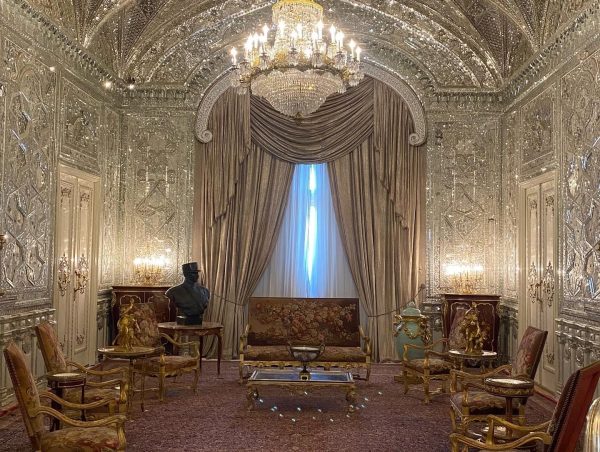
Now Golestan is damaged. War has reached it in the way that war reaches everything, without mercy and without pause. Pieces of history are breaking apart in real time, and I find myself slowly regretting every photo I never took. I thought I had time. I thought the palace would always be there, waiting for me to return.
But Iran is not the same Iran that I visited. It isn’t the same Iran my grandfather grew up in or the Iran he fled during the Revolution. It is a place suspended between the past and the present, between memory and destruction. From here, thousands of miles away, all I can do is wait for the next phone call. The one that tells me if my family is safe, if some are missing and whether the path will open before the world shifts again.
It was forty seven years earlier, during another moment of upheaval, my grandfather had boarded that plane with his friends and had flown it into an uncertain future. Now history is echoing, not repeating, but humming in the background. Once again, my family is waiting for a word, hoping the path out would open before the world shifted again.
Emmy • Mar 6, 2026 at 1:42 pm
So beautifully written and very impactful!